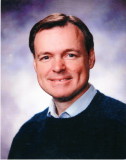
Interview with Stan Plewe
Description
Interview with Stan Plewe
Transcript
Sometimes gets a little noisy, but it still works. Okay. Three, two, one. We're talking with the dean of continuing education, Stan Flew at Dixie College. Stan, how did you get started with continuing education here at Dixie? Well, about 13 years ago, I applied for a position that was opened that was jointly sponsored by the Washington County School District, the City of St. George and Dixie College. And the idea was to take advantage of the facilities that the three institutions have and then not duplicate by having the college offer the same thing that the city and the school district offers. So it was a joint program, and I'd been doing that kind of thing up in Oregon with the community college. And, you know, the rest, I guess, has happened gradually. As the programs grew and developed, the need was greater to get to college. And so after, I think about three or four years, then I moved to just working full time for the college. And we retained the cooperative program under that umbrella, and we still have the cooperative community programs operating. But basically then I just became an employee of Dixie College. This is a major effort then, almost a pioneering effort to cooperate, this. Well, isn't it? Well, it certainly is. It's a landmark in the state of Utah to have school districts and city government and a college cooperating to deliver services. And I think it speaks well for the leaders. The superintendent of the schools at the time was T. Lavoy Esplin, and the college president was Wolf Kerr, and the mayor was Gray Larkin at the time. So those gentlemen, and I think probably in the background were others who were making decisions and pushing this along, but they should be credited for establishing something that's lasted for 13 years and basically is flourishing. It gets better every quarter. We put out a quarterly brochure. This quarter it just went out, was mailed out to 22,000 residents. And so it's become a pretty significant document. About 50 pages of classes and programs for community to participate in. You get a significant percentage of those 22,000 that participate, don't you? Well, I think so. I think people are interested in being involved in the St. George area. We this winter quarter, I think the enrollment from the continuing ed side, which wouldn't include, you know, all what the city registers, but we. We had about 3,700 people involved in continuing education, which would include our senior citizen programs, retirement programs, the community program side, the evening credit, adult education. We do a lot with returning students, adult students coming back to further their education. So we serve a lot of different populations. You have almost as big a faculty to watch over as a college in and of itself. Don't you? Or bigger? Well, we have a lot of part time faculty and there's one of the nice things about St. George for the size of our community is we have a wealth of talent in the teaching area, which makes it all possible. Continuing education. It's also been involved with senior citizens. The Continued learning, Lifelong Learning program that's come part of the umbrella has. Well, certainly as a community college, our task would be to look at the community that we serve and try to, you know, do what we can for the populations that are here. And our retirement segment is large by proportion and by size. And we saw that as an important part of what we do. We've adopted several programs that we feel are meeting some of that need. One of those is the Institute for Continued Learning, which the idea was brought to us by Ed Groves, who was a pioneer down in San Diego in a similar program. And he basically brought the idea up here and we saw it as a good one and put it into practice and now have over 500 members of that institute. And they take a variety of classes. They teach their own classes, they get volunteers. It's just a marvelous program. Program where people are actually learning about geology and history and all those kinds of things that some of us think people get tired of. But in this case, we find out that retirees are very interested in continuing their education. Were you surprised? I really was, frankly, because my experience in working with retirees had been somewhat different than that. It's really been fun to see that grow and, and they govern themselves. They have their own officers and they have their own membership program. And really it's something that the college allows them to use the facilities and we help in a coordination way. But essentially they really run their own program and get their own instructors and it's really a model program. Is this a career goal to get involved with continuing education? Well, not really. I started out in education when I was in Vietnam. I was sitting there one day kind of wondering what I was going to do when I got back because I already had my bachelor's degree and was going through the college catalogs, trying to look at a master's degree, having several children and realizing that it was going to be difficult to fund on a teacher's salary. I said, well, I need to go back and get more education and see if I can't figure out another way to do this. And really came across a community education concept that was being taught then at BYU and came back and got involved in that program. And so I really didn't start out in that direction, but it's been fun. Very interesting. Vietnam was the time that you thought about that. Well, I had a lot of time to think. Yeah. And so, yeah, that was. You know, I was in a situation of making some decisions, and so I guess I kind of decided over there that was the direction I was going to go when I got back. How long was your tour of duty in Vietnam? Well, I had the standard one year. I was in the Mekong Delta down in the. Working with the Vietnamese as a mobile advisory team leader. Good experience, and I. I wouldn't want to do again. What were some of the feelings that you had there? Well, it was a difficult time. Those of us that grew up in the 60s and saw the sentiment against what we were doing over there and what was going on. I think the thing that I felt was that because I worked with Vietnamese units and Vietnamese people, I only had four other Americans that I ever associated with. Basically, while I was in Vietnam. They were on my team. And so I pretty much interacted every day with Vietnamese and got a little different perspective. I think, for the most part, they were appreciative of what we were trying to do. I recall one of the vivid things was whenever they would have elections for their little village and hamlet officials, they would fly their little Vietnamese flight, which no longer exists, of course, but every person in the community would fly this flag. And I think it was, to me, indicative that they did have some pride in trying to establish this nation and make democracy work. But, of course, they had a lot of other problems and so on. It was a unique time, but I'm fortunate that my children don't have to go through that. Look back at your background. You're a native of northern Utah? Not really. I was born up there, but I grew up in Las Vegas. And so I had passed through St. George a number of times going to school at BYU. And so I knew this area and its beauty and the nature of the community and so on. And so coming back really, to. To the desert was kind of. After being up in Oregon for four or five years, it looked good to dry out down here. So the rain didn't agree with your. Well, you know, it's just when you're used to doing things out of doors and so on. But Oregon is a beautiful place. That's certainly one of the choice places in the world. But really, I guess the main thing in St. George for us is just been the family situation has been great for our children. Tremendous teachers here, tremendous friends. And I just feel like there's probably no better place to raise a family. I know you've been involved in other things like youth athletics. That's been kind of a passion. Well, Little League, you know, Dixie Little League's kind of close to my heart to see what that does for young men, to help build character and opportunities to be on a team and to learn skills and so on. It's a great volunteer effort. It takes a lot of people to give something up to make it work. So, yeah, that's been a fun time. What have been some of your most memorable experiences being in continuing education? Are there some times that you've said to yourself, hey, this is really where I wanted to be? Well, I. I think the most memorable things in continuing education in St. George, and this has to do with the fact that we're a smaller community, but a growing community, and that is to see new things happen and grow and develop and to see people take charge of a program and really make something happen and provide a real good service. A good example is our new University center, where now, after so long without having advanced degrees in St. George, people can get a bachelor's degree right here in St. George without having to leave home. And I think those kinds of programs happening where something changes in the way of service delivery to alter people's lives in a positive way. And I could say the same thing for the adult education program. When that got started and people were able to graduate and complete high school diplomas in their adult life, and the senior citizen programs, the retirement situations and the dance programs for youth. I mean, it just goes on and on, and there's always a new one that's going to come, and I don't know what it's going to be, but we've got a great staff here. The people that have been hired just do their jobs in an exemplary way and makes it interesting, but also makes it exciting to see that kind of change. What sort of things would you like to do still in your life? Stay healthy, for one thing. As you get older, you really miss not being able to do some of the things you enjoy doing. And you keep thinking you're going to be able to golf someday and do some of those things, and you want to stay healthy. But really, I guess what I'd like to be able to do is to continue to be involved with youth, with programs and education and learning. I think that one of the beauties of America is that we do make a difference, that people do have input in lots of ways, and that I just want to be a Part of that, no big part, but you just continue to work at trying to make it a better place to live and a better place to learn and to be educated. I know you have several children and they've all been active in a lot of different things, haven't they? More active than I'd like. Yeah. There's always sign up for this and sign up for that. We're a sign up family. But yes, seven children and, and in every situation they're doing things that are making them better people and the skills. But I go back to the fact that people care here. You can see it in the educators, you can see it in the city recreation department. You can see it everywhere you go where you have a child involved in a program. The people who are sponsoring it care about what's on going. So you have quality programs. Is that one of the things that you like about the area, the atmosphere that way? Absolutely. You know, there are places where the climate is better or there are places where jobs pay more and so on and so forth. And we all know that. But I don't know when you leave here and you always want to come back because you know that there's a certain quality of life experience that's not duplicate it easily. Stan, thank you. Congratulations. Thank you. Appreciate knowing you, Larry. We're talking with Judge Mike Dobson of Washington county with us right now. And Mike, let's find out a little bit about you. How did you come to St. George? What brought you to St. George area? Well, actually I followed my wife from England. She was on a mission in England and I was a district mission president and had an all sister district in which the lady missionaries were prominent. And this young lady caught my eye and I decided I'd follow her back to the United States after she finished her mission. And that was in December 1971. And we were married December 4th, I mean March 4th, 1972. So things worked out pretty good. Love brought you to St. George then? Yeah, love. And it's funny, I asked my wife what really attracted me to you or you to. To me. And she says, well, I thought you were rich. I said, that's okay. I thought you were an American beauty. See, Dorothy was born in England. She really isn't an American beauty. So we often have fun about that. But we've been 20 years together and it's been a wonderful experience. Let's talk a little bit about your work now as justice in Washington County. What do you like about this position? Well, I like the regular shift. I say regular shift. It's day work. But I just started night court for a couple of hours twice a week to accommodate the city citations. I always have liked meeting people and no two days are alike here. From all walks of life and all different types of people, I hear every excuse under the sun for getting out of a citation. Sometimes if I haven't heard one before, I'll jot it down and try and remember it. But it's exciting meeting people. People in general are good and they don't mean to break the law and they're caught and they need a judge to talk to. And most courts you cannot go in to speak to a judge. It's called the next parte he represents. It means that the officer's not there and the person's here talking to the judge, giving their side, which is quite illegal. So we get around that by I tell them not to tell me about the problem, but whether they're going to plead guilty or innocent. And if they plead guilty, then we can discuss the case. Most people plead guilty and rely on the judge to make the decision for them. But it is an interesting court. This is the last bastion where people can vote, actually vote a judge in. And I would imagine gradually they'll take that away from us, taking everything else away from us. But I'm a proponent of the justice system and electing an official that the people want in there. I think it's a good thing and it'll be a sad day when we lose that. The first time I met you, you were a policeman. Was that your first, first work here in St. George? No, it wasn't. I came over. In actual fact, I'm a qualified painter and decorator, paper hanger, wood grainer and I had my own interior design business when I came over here for six years. But my wife begged me to get out of it because I was giving money away, I was never making enough to live on. And people would come up and say, well, I don't have enough to pay this. And I'd say or forget it. And so I had lots of people owe me money, but I wasn't taking any pay home, so I'm not a good businessman. So I got out of that. And Joe Hutchings, who was the chief of police at that time, asked me if I'd like to become a part time police officer and work with the youth. And that's how I started. I was 12 years with the St. George Police Department, ended up as a detective sergeant in the juvenile division. And you began working with youth. I remember you as Officer Mike Going from school to school, that must have been an interesting position. Yeah, Even today I get people come in with a citation and want to see the judge and see me who knew me as children and they say, oh, Officer Mike. Which is quite a compliment, really. Yeah, I did. I enjoyed that job thoroughly working with the kids. I went from classroom to classroom in the elementary school schools. I went in uniform and took my dog and was present and a figure that they could come and talk to and get to know. And then in the junior high and high schools, I went in civilian clothes and mixed with the kids. I sat in art classes and English classes and I sang with them and did everything with them and became part of each school that I attended that was mainly was Dixie and Pine Bureau. Of course, I was a first honorary graduate from Pine View when I was given that honor, along with one of the secretaries, there was two of us that was given honorary graduation rights. And it was quite exciting. But I loved working with youth. And as you know, I worked for years in the soccer program. I started that probably 16 years ago. I'm a little bit tall, so I've retired from that. The 12 year olds run faster than I do, so I quit before I got embarrassed. And I've been involved in child abuse programs and youth programs all the time, the 20 years I've been here. First of all, let's talk about the Officer Mike. Are there some experiences that you recall most fondly about being Officer Mike? Well, I remember the first citation I ever gave was to a lady on 700 south near the college, and she'd been speeding and I pulled her over and I went, and very officially, this was my very first ticket I ever gave and put my hat on and I tried to square my shoulders and walk up to her and I told her that I was going to give her a ticket for speeding. And she gave me her license and I started writing and she said, excuse me, Officer. And I said, please don't interrupt, ma'. Am. I've got to get this finished. And she said, but officer, I said, ma', am, please don't interrupt me. She said, all right. A few moments later she said again, officer. I said, madam, if you don't let me write this citation, it's going to cause problems. She said, I only wanted to tell you that the license number you wrote down was your own license number. So with a red face, I tore that ticket up and walked to and never looked back. And she's probably still wondering today why I did that. But the next Day, I got into trouble from Judge Owens because you're not allowed to tear tickets up. So in one day, my first day, almost my first day as a police officer, I'd made a mess of a citation, got into trouble from the judge for tearing a ticket up without permission. I remember that quite well. Another incident, I remember a young man in the same area around the school there. I had written a citation to him. I can't mention his name because he's dead now, deceased. And he was nice and then wrote a very scathing letter to the chief and called me some very bad names in the letter. And then at the end, he said, I've changed my mind. He was doing his job. He's a good officer, bless him. All in one letter. And I have some of these in my book of remembrance. But there are some fun things that have gone on. Why did you get involved with the soccer? Why did you begin soccer programs? Well, being a transplant from England, of course, I don't understand baseball at all and basketball. It's very strange. But I could never understand running from one end to another and just trading points. So I thought, there's got to be a better way. We've got to get soccer in here. So I got three or four young people that were willing to work with me and Sher Miller, who was the recreationist director in St. George at that time. I went to him and I said, I'd like to start a soccer league. He said, go to it, and when you've got it started, I'll take it over. Well, myself and Joan Peterson, who was a lady in the community that was wonderful, just helped me. She was my secretary in my right arm. We started a league, and we had about six or seven teams running for quite a while by ourselves. Then it got too big. We got into the hundreds and then the thousands. And so we handed that over to the Parks and Recreation Department, who've done a good job with it from that time. But I Understand there's almost 2,000 kids playing regularly now each year. You must be proud of the growth that's taken place with the sport in this area. Yeah, when it's on, there's not a day that I don't leave work and go by there, see them playing. Then I don't feel a little pang in my heart and think, yeah, I've left a little bit of legacy behind. And if Carl Brooks is listening, I'd like that field to be named the Office of Mike Field when I die. Let's talk a little bit about some of your other activities. I know you've been involved with performing, singing around the area. How did that get started? Well, it started at home, actually. I used to do a lot of singing in the shop. I wasn't a very good singer. I used to sing in the shower. And my wife said, you're the only man I know that can go for a shower, and it takes three hours. We've got to stop you singing in there. And this is when we had just an apartment with just one shower. And so she gave me some money to buy one of these karaoke singing machines that I could put in the shed or the garage. And that's how I started singing. Actually, I'd done a little bit before, but nothing spectacular. And then I met a young lady that I sang with, Shannon. Shanna. Do you know, for the life of me, I can't think of her last name right now. Shanna Simpson. And we were together for about five years, and we learned songs, got the background music, and performed all over the state. And then she left to start a business of her own. Own. And then Catherine Porter and I began singing together. Catherine came one day and said, I'd like to sing with you. And I said, fine, if you can put up with me. Because she's a voice major, she has a beautiful voice, and somewhere along the line, she missed a vocation. She should have been professional. She's very good. And we've been singing together now for about seven years, and we sing at parties and conventions. And as you know, I don't read music or write it, but I did write the words to the Great American Dream, which went back to the Statue of Liberty. And we were postponed at the last minute. We should have sung there, and we were postponed at the last minute. That was a great disappointment. But I promised the kids then, and I tell you now that one day I'm going back there and I'm going to stand on the steps of the Statue of Liberty and I'm going to sing that song just to fulfill a dream called the Great American. You get enjoyment, obviously, from the singing. What are some of the most favorite experiences you've had in singing? I think one of the greatest experiences I ever had was at Cedar City for the bicentennial when I sang before a crowd of about 8,000 people, and I was dressed as Uncle Sam. I sang the Great American Dream. Boy, the applause and the roar at the end was just. I mean, talk about adrenaline. It was like a narcotic. It pumped me up for weeks afterwards. And that's the way I feel when I sing. Now, I sing regularly at the National Institute of Fitness for their graduations, and I really enjoy that. People from all walks of life, from all over the world, and I usually have a captive audience of about 40 or 50 people, and I really love that and the adrenaline that comes from their applause and their appreciation of the songs. If you're looking for Michael Jackson, I'm not your singer. But if you're looking for a love song or a ballad, Neil diamond and Catherine sings, of course, a lot of Barbra Streisand stuff, and we do Broadway stuff, and we sing separately as well as together as a duo. But whenever I feel down, if I've been singing somewhere, it lifts me. I forget my problems. It's my release. That's what I do. What about now? I know you've had some health problems recently. You're overcoming a heart attack. What sort of experiences did that bring into your life? Well, funny enough, everybody laughed at me when I had a heart attack. They said I wasn't big enough to have a heart attack. Whether they thought I didn't have a heart or not, I'm not sure. But it was stress. It was brought on by doing some extensive study at the National Judicial College for this job because I wanted to become better educated. I'm a young man from the back streets of England. I didn't start my education. I went through and graduated at 14 in England and didn't start my education until I was in the British forces. And that was 2021. And so I took on this for the very first time, three judges were elected to go to the National Judicial College. There was three from Utah, and I think two from every other state. And we went there and it was a brand new thing that we had to be qualified. Extensive course, absolutely, very hard course. And we studied and then brought studies home from there and did correspondence. Then we went back for two weeks to do the final testing. On top of that, I had a little girl that was giving me problems at home, you know, a typical teenager. And right out of the blue, the heart attack came. But I learned a great deal from that heart attack is that some of the works I've done have been recognized in the community. And nurses who I didn't know personally took care of me and thanked me for what I'd done for their children, which was extremely gratifying. And I can't speak highly enough of the hospital here. They really looked after me. Then just recently, I've just been out of the hospital again into the hospital and I've been out for about three weeks. An old war wound and some scar tissue was causing problems, but that's put right now. And so I'm back again and I'm putting weight on and just enjoying my job. I'm not playing soccer anymore. I was going to referee for the schools, for the high schools this year, but I decided that I'd take some time out for me and my family and a little girl and do things with them for a change. I've given quite some time to the community and other people's children. I think I need to give some time to my own daughter. What's the future for Mike Dobson? Well, the future is here, of course. This is my home. Needless to tell you that I'm proud to be an American with a funny accent. But I really love this country, the opportunities it has given me. I'll still work in organisations at the moment we're doing a play which is running on the 24th and 25th, a musical comedy about Abraham and Isaac. The proceeds will go to the Jubilee Home and I think the hospital are sponsored sponsoring us on that. It's a musical comedy written by Mark Ogden, who's a very talented writer and composer and a great man. I just appreciate him and I like to do those roles, comedy roles, and I've got a good part in it and it's very well worth singing it. And so I'll continue to be in the theatre and sing. I think I've got probably another 10 years that I can sing without being too old. And I appeal to the older group of people here, but the youngsters don't care about me that much anymore. But it is fun. There is a theatrical background in your family, isn't it? Yes. My mother was a chorus girl. My father was a school teacher, grammar school teacher. My mother was a chorus girl and up to the day she died at the age of 82, she could kick her legs higher than I could kick mine. So, yeah, she was great influence in that. I followed around the stages in England when I was young. I remember as a young child being backstage in the theatre when she was doing pantomime and things like that. She once told me that she played with Mary Pickford very early on in her life, was in some kind of a show. I don't remember a great deal about it, but mother got around a great deal. Mike Dobson. Congratulations and thank you. Thank you very much. Let me add that on. Let's talk just a little bit more. We're talking with Mike Dobson. Mike, you've also been involved heavily in church work, I know. Since you've been to the United States. Let's talk a little bit about some of your favorite experiences there. I think if I saw. My greatest experience was being chosen as a bodyguard for President Kimball when he came with an entourage from Salt Lake City to rededicate the temple. He was here for three days, and during that three days, I was allowed to walk beside a prophet and take care of his dear wife while he was busy at times. But I spent some time with him. At the end of the three days there, I was with him. They lined everybody up and took photographs, and he went along shaking everybody's hand. And he came to me, and I put my hand out to shake his hand, and he knocked my hand away. And then he grabbed me and pulled me to him and hugged me. And he said, I love you. He said, I love you, I love you. Three times he said that. And of course, I was in tears. And the guys around me, even the biggest policemen, had tears in their eyes. And it was quite an experience to know that this prophet had put his arms around me. But the most memorable thing was about 10 years later, I saw him again for the last time before he died. And he came in, I think, was to install a new temple president. And again, I was one of the officers that was selected to go up to the airport. And this was a quiet visit. It wasn't with crowds or anything. It was a quick visit. But I was allowed to go up to the airport and stand in line as he came off the airplane, the private plane that he came in with some security from Salt Lake. And he just had to be helped down the stairs of the plane. He was using a cane. And we lined up and he came along and shook everybody's hands. And when he got to me, he just smiled. And I put my hand out and he pulled me towards me. This is 10 years later. And he said, do you remember that I love you? The hair on my head stood up. And once again, of course, I'm easily drawn to tears. I'm one of those type of people that can shed tears at the drop of that. It's probably theatrical base, but I really felt this. For this man to remember me to ten years later, with all the hundreds of thousands of people that he's met and dignitaries to remember one little guy from St. George was just tremendous. So that's just one of the experiences I've had working with the church. And I have been personal bodyguard while living now here To Thomas S. Monson, who was my wife's first bishop when she came over from England. And he met me in, asked me if I knew the Hartley family. I said, yes, I'm a son in law. And he said, I'd like to go and visit them. He said I was their bishop some years ago. So I called my wife, I said, get over to your mother's. Thomas Monson's coming over to visit your mom and dad. So my wife and daughter went over there and her sister and I took Thomas Monson over to my in laws and they had a family of 13 children. He named every one of the children and remembered something or an exploit or something they did with everyone when he was a bishop. It was unbelievable that this man's memory was so keen. And he left a blessing with my parents in law before he left. And he said, I'm glad I got to see them. So there's another instance where you know that these men are gifted because to remember 13 children some 35 years ago is unbelievable. And those things cement in me the foundation of the church. And it's been good for me. That's why I came over here with the church. I really came over for Dorothy. But I tell everybody I came over for the church. But that's part of my life now and I thoroughly enjoy it. Do you miss your home country? I miss fish and chips and double decker buses. I don't miss the rain at all. We've got plenty here, as you can see, so that reminds me of home. I love the warm weather. The first year I was over here I wanted to go home. I think it reached about 117, very hot weather, and I didn't know how to handle that. But my wife persuaded me to stay and by the second year I was acclimatized. As you look back in your life and especially your tour of duty, I guess you could say, as a police officer and all, would you do it all again? Yeah. I wouldn't change anything. Even from the illnesses and the bad things that happen in life. Everyone has made an impression on me and I think have helped to make this rough piece of stone a little bit smoother, a little bit easier to handle. I'm grateful for the experience. I don't think I'd have missed any of it for the world. I can't think of anything I'd change and I hope it's that way the rest of my life. I think I've made some good decisions in life. I've been very fortunate in having been in the right place at the right time. Little back street boy from England. Being a judge in America might not seem much to some American people, but I bet my mom and dad are proud of me anyway. Thank you, mate. You bet, Sam.
407
views
0
downloads