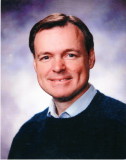
Interview with Steven H Peterson
Description
Interview with Steven H Peterson
Transcript
Okay, three, two, one. We're talking with Washington County School District Superintendent Steve Peterson. And Superintendent, let's talk a little bit about your background. How did you get into. Into education? What led you to the field of education? I suppose it is the example that was set for me by some teachers that I've migrated much when I went through my regular schooling experience, primarily in junior high and high school level and even the elementary level. And of course, as I was in high school, I was into athletics and student leadership and girlfriends and all those things. And I really wasn't concerned about it. I got into college. I went to snow College, and at that time I thought I might want to go into law or something like that because I was taking some business law classes. And I decided. But the further up the line I went in my educational career, the more I realized that I did enjoy working with kids and I wanted to do something significant in the lives of students to help them. And so that was when I made the decision. It wasn't until I was a junior in college that I decided that's what I wanted to be as a teacher, and that's what I went into as a business teacher for some years. You mentioned that there was influence in your younger years, but that didn't really blossom until you were in college, that sort of influence. That's correct. And of course, there were some principles and different things instilled in me that I think was instilled by those teachers. I had one, for example, in 8th grade. His name was Joe Lowell in Monroe, Utah. Of course, I tended to be one that would get in a little diffugly every now and again with different kids and so on. And he just dropped me up short and said, steve, you've got leadership ability. You can either lead people to do good or bad. And I'd strongly recommend that you straighten up and try to do good things instead of bad things. And so you know, those kinds of things. You mentioned you were a junior in college when you made the decision. Where were you going to school at that time? At that time, I was going to Utah State University and I was in the business program. And the more I got into the accounting aspect of it and the management aspect and so on, I saw the implications of being able to teach in the accounting area and so on, and that's when I decided that. Was there an influence in your family? Did you have a tradition of teaching in your family at all? No, there were no teachers in my family, and I came up through in those days. It was kind of a unique situation. In fact, I think I was about the only kid in my hometown that came from a divorced family. My mother was married and divorced four times by the time I was 13. And there was no history of higher education in our family. And so I had the work ethic instilled in me by my mother. But I can remember my grandfather telling me, after I'd gone to school for two years, I got a scholarship to play baseball and a leadership scholarship at Snow College out of South Spirit High School. So I went to school, and my grandfather, after two years, he told me, steve, you missed long enough. Now you need to get out and go to work and make something of your life. I kept telling grandpa, you know, I feel like if I can stay in school that I can do better than if I just quit and go to work in a gas station or something. Of course, he came up through a situation that he didn't understand. And so it was other influences that tended to instill in me the idea that maybe I ought to go to school after going through Utah State University. Let's talk about your educational career. Did you begin as a teacher at that point? Yes, I began teaching in Iron County School District. I taught in the business distributive education program at Perowin High School in the morning and Cedar High School in the afternoon. And I lived in Summit and traveled back and forth, and it was a great experience. And I still got a lot of good friends as a result of that. One of my claims to fame there was Kent Peterson, who is now the business administrator in Hunter County School District, was one of my students. From there, I went to Sevier Valley Tech and I taught him the business program, so Tech in Richfield and taught students from North Sevier, South Sevier and Richfield High School as well as adults. It was a great experience. And one of my claims to fame there might be Bill Sampson, who's our business administrator here. He was one of my former students. And I went in to became the business administrator in Seviera School District for a few years. And I just decided that I like to work with people more than just the numbers and so on. And that's when I took the leave and went back to graduate school to get into the graduate program. And at that time I went to Utah State University for that undergraduate school. What was the path that took you to Washington County School District in the superintendent's position after finishing graduate school, I was superintendent in Paiute School District, small school district with a lot of experience in a Hurry. And after four years there, then I took a position as superintendent in the hottest place in the world, Gila Bend, Arizona. And it was after a couple years, years. And there was an opening that came up for the joint vocational director position between Dixie College and Washington School District. And I made some contacts. I was interviewed and I was hired at that time as the area vocation director for Dixie College in Washington County School District where we put together the program so that juniors and seniors in high school and take college courses during their high school experience. That was a very difficult and tough project, but it turned out to be very positive for students. We have several now who do complete their associate degree within a year after they graduate from high school. And it's been a very positive thing for students. And after serving in that position for, for a few years, when Superintendent T. Lavoy Aspelin retired, then Jack Grill is named superintendent. And he asked if I would come in on a full time basis for the Washington School District. And so that's where my connection started. On a full time basis with the school district. And then I think Jack served for five years. And upon his retirement or his resignation at that time, Board of Education asked me if I would accept the job at that time. And that's been eight years ago at this point. Have you enjoyed the work? Yes. I've always said, Larry, that I didn't think I'd really been challenged to my limit, that I always had more capacity than I had been involved in at that point. I about concluded at this point in my life that I'm just about there with the extracurricular, full time, part time job I have in the church as well as being superintendent. I keep plenty busy and I have enjoyed it immensely. I enjoy challenges, I enjoy working with people and it has been. I enjoy coming to work every day even though I run into some very difficult challenges and assignments. That's the kind of thing I enjoy doing. This has been a hot seat sort of position though, hasn't it? Oh yes. There's always key issues in public education. I heard one fellow describe public education administration as being the term, as managing predicaments because you've got the public, you've got the teachers, you've got the students, you've got the board, you've got all of these aspects of your job that you have to deal with. And it's delicate balance in trying to balance all. And there are times when it's extremely challenging. But we've had very good board members here in Washington County School District and I think that's part of the reason that the job is enjoyable is work with people like that as well as all the people in the school system. Was there an experience in your teaching or your administrative career? Is there one experience that you that said well you got through it and you said yes, I'm in the right position. I'm glad that I made this selection as a career. I don't know, I think that some of the more challenging ones that I've never experienced prior to getting into Washington County School District was the tremendous growth that we faced here and the challenges of just trying to house students. And I suppose one of the biggest challenges I've ever faced is year round school. And I don't know if you were in the area when we first started talking about that, but the feelings were extremely negative and we talked about that for eight years before we actually implemented it. We did a lot of planning, a lot of studying, a lot of talking and when year round school schools were implemented and how beautiful it worked, it did in fact work and people seemed to be happy. Generally speaking, I think the research said 87% were happy. Then I thought, you know, that's a real satisfying thing to be involved in especially when the tremendous savings to the tax through that program. And at that point I thought that's something that I really feel positive about. Let's talk about your service beyond your job. I know you've been involved with church work. You've had some key positions. You're holding one right now. Yes, I've got one that I started bright and early yesterday morning getting up at 5 o' clock to get to with the gentleman I worked with to get down to Nevada, Mesquite, Nevada by six in the morning and then by the time I finished down there had to get back to Bloomington Stakes center for interviews by six that night. Finished last night at just about 10:30, right around 10:00 clock, 10:30 last night and that's typical and it, it's a great experience working with the people in the Bloomington state as well as the well and Mesquite and Bunkerville, Nevada in our state. I work very closely with those folks. So we have 13 units in our state, 12 wards in the Spanish speaking branch in Bunkerville and that is a very satisfying part of my life. I enjoy it immensely even though there's tremendous challenges there also with three different states involved and two different time zones and that many units, it creates all kinds of challenges but it's something that I'm constantly involved in helping people and being of service to people. And it's been a very satisfying thing to me. I know you served as a bishop before you were stake president. What sort of challenges did you enjoy there and what sort of things were frustrating for you? Well, when I became a bishop, I, you know, you live around people and everyone just seems to. Their life goes on and don't seem to have any troubles. But when you become bishop, you find out that it seems like everybody has their challenges. And that was a real eye opener to me to work through problems with people that I never had that opportunity before. And that was a real challenge. But yet it was extremely satisfying. Of course, being in that position, you work much more closely with people than you do in a state calling. And I enjoy, I enjoyed that very much. I know there have been some other activities you've been involved in also beyond church and school. What are some of the things that you enjoy doing personally? What I enjoy doing personally? One of the things that I really enjoy doing is fishing. I'm a fisherman from way back and it just seems like there's the years go by that time just becomes less and less and less as the years go by. But that's something I enjoy doing. I enjoy going out with my family, water skiing. I enjoy hunting with my boy, and I enjoy when our family gets together, we have a little reunion with all of our kids and so on in July. I enjoy that very much. Is there a, is there a particular volunteer situation that you've been involved in even as a youth that you felt like was some special experience beyond the church, beyond the schoolwork? Well, I've of course, when I lived in Richfield, I got involved in the jcs and I can remember being involved, heavily involved in putting a can of on the city park for picnics. And after going through that experience as a relatively young person, I thought, you know, that's really neat to be able to be involved in that. And I've had the same experience here in St. George with the Rotary Club and putting some of the facilities on the snow park and being involved in many different things through the Rotary club here in St. George area, including the Rotary Bowl. I served on some of the first committees there. And one of my big jobs was the fundraising aspect, selling ads for the Rotary Bowl, Brooklyn and so on. And to see that whole thing come together in all of its glory, if you will, there's a lot of satisfaction that comes from. What are some of the things that you'd still like to do in your life? Well, of course I'D like to do, just like every parent would, is to see your children raised and educated and off onto a good start. I'm very proud of my children. I have eight children, five of which are married now, believe it or not. I have nine grandchildren right now. And I think that one of the things that I want to do and my wife and I plan to do is go on a mission for the church when we have that opportunity some years down the road. Superintendent Steve Peterson, thank you, and congratulations on the award. Well, thank you, Larry. I appreciate the opportunity to work with you and all the support of ksgi. You folks do a great job.
361
views
0
downloads