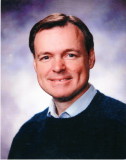
Interview with Principal David Broadhead
Description
Interview with Principal David Broadhead
Transcript
Okay. 3, 2, 1. We're talking with Pine View High School principal David Brodhead. And first of all, let's find out. How did you make the decision to make education a career? That's an interesting question, Larry. What happened was I went to Utah State University after graduating from high school and went there a quarter. Then I transferred to BYU for a quarter, and then I quit. And about a year or so later, I went to Japan on a mission for the LDS Church. And at the conclusion of that, I decided that I wanted to be a teacher. That's what my. I received great joy from teaching people, working with people in that capacity. So when I came back in 1957, my mind was made up. That was what I was going to do. You went back to which school then? Well, my blood's pretty blue. BYU? Brigham Young University. And of course, graduated there in 1961. Four years later, went to California and taught down in California for a period of years. I actually taught for nine years. And then I went to the University of Southern California and completed my master's degree there in School of Administration, and then the next year applied for a job and worked as a vice principal there for four years. That brings us up to 1974. And I applied here for a job at Woodward Junior High School, vice principal. Came here in 1974 and been here ever since, except for the three years I left. Again, let's go back to your mission in Japan. First of all, was there one particular incident there that said, hey, this started the process of thinking you wanted to be an educator? I can't think of one incident, but the whole life of teaching people and helping people learn, really, I don't know. It was a source of great satisfaction to me, where you're working with people every day and you help them learn something that they didn't know and watch what happens in their lives as they learn what they didn't know and as they used that and the change that would come over them. And so that happened, of course, many times. And as I saw that, that, to me was a great, fulfilling kind of a thing. It helped me to visualize what happens to people. And people then became really important to me. Rather than things, people became important. And I think that's a turning point. If you're going to work with people, really work with people a lot, probably no greater area to work than in education, because you're working with people all the time. What about the decision to go from teacher to administrator? What led to that? That's a little more difficult After I taught about seven years, I decided that obviously I wanted to go back and obtain a master's degree. Hadn't decided on the area. I looked at counseling, worked in that a little bit at the school for a while. And it's one of those things that just didn't really fit. It didn't click. I didn't get equally excited about that as I was about teaching. So then I took a class in school law. That's the first class you take in administration from a professor who had been a superintendent, teacher, principal, was a great instructor, one of the best ones I've ever had. And he was from the University of Southern California. When I took that, I got partway through that, said, this is exciting. This is the kind of thing. It's a challenging minute now, of course, I didn't know what I was getting into, but nevertheless, I went ahead and then completed that a year later and moved into it. And I wouldn't have done anything different. It's been great and been marvelous. I guess, really, Larry, the difference between being a teacher in the classroom and being a principal is you're still teaching, but in addition to the teaching process, you have many, many other challenges every day. And every day is a new day. You really don't know what's going to happen from one day to the next when you're in administration as a principal. So that was kind of the turning point there on that. So there's a certain excitement about the job. Oh, yes, tremendously challenging. And of course, I love a challenge. I mean, I really do. And I've had some that you wonder when you get into it, whether you loved it or not, and at the time you didn't. But I do like a challenge, and I like problems to solve. I like to have the kind of thing where I have a problem that I've got to face and I've got to solve it. And then if there aren't any real problems, type of thing, then to look at a situation and say, how can I help? Maybe change the circumstances so I can help this teacher be more effective with these students. And having spent the time in the classroom was kind of natural. But, yeah, I like the challenge. Exciting every day, you know, And I think the rewards of, you know, and obviously in any. Whatever we're doing, we need to feel reward from it. I think the hardest and most difficult thing was when I was a vice principal for eight years, four years in California and four years here. You think at that time that you don't have a friend in the World, except your family. And the dog is even questionable. He'll even bark at you when you go home sometime. But that was a little difficult. It was having spent four years in California as a vice principal, then came here at Woodward Junior High. And then we moved to Dixie Junior High for four years there as vice principal. That was a pretty stressful time. Moving into the principal from there was great. I take it then that you have sympathy for the vice principals. Sure do, Larry. Right now we have two, of course, here this year to our growth and size. Mr. Jim Johnson and of course, Mr. Marshall Topham. I can empathize with them. I know exactly what they're doing. And of course, I get involved in discipline here, too. But not really like the vice principal does, because my responsibilities here is the whole school. And I work more in the other areas with teachers than that. Although I do discipline. Kids get it, but I know what they're going through. What led to the decision, first of all to go to California and then to come back to Utah. That's sort of strange. I don't really know why, Larry, except maybe you've experienced this. Sometimes you just get a feeling I should really do this. And that's the sort of thing I had. I really didn't know why. Didn't really know anybody down there, particularly at that time. But I look at here in Utah. I had a job offer out at Roosevelt. First year I graduated, 1961. I remember they offered me $3,700 a year to start there. So we began to look around a little more. That was the first interview I had, and they offered me a job. We looked around a little more and finally began the interview. They had people coming up and interviewing at that time. They would send representatives up from various states and around the country. Interviewed with a man from down in that place called Corcoran, California, near about 50 miles south of Fresno. And they offered me a job there. And the salary was quite a bit more. It was like $4,200 a year. And my wife and I talked about it. It's one of those things I felt. We felt, no, this is what we ought to do. Didn't know why. And it was really a great move. Great move. What about the decision to come to St. George? I know why I made that decision. That's easier, by the way, in Port of the television. Had a great experience down there. That's back in 1961. Things are a lot different than they are now. That's 31 years ago. And at that time, especially there, I Went to. It was a rural area, and even the secondary. I worked one place one year, and then I moved out that one year. We were living in the big valley south of Fresno there. The Thule fog. I don't know if you've ever experienced that. Well, I tell you, that's the worst fog you've ever seen. It rises up about as high as a telephone pole in the daytime and drops right down at night, and you can't see anything. I used to drive 43 miles round trip to work from where we were living to where I taught. And I remember sometimes they'd rise up just above the hood of the car, and you'd get down and look under the steering wheel, over the hood of the car, and you'd see, fine. If you're up above, you couldn't see anything. I got through with that for a year and I said, I don't want to do this. So we moved to Southern California. Down there 12 years now. Back to the question, that kind of thing. Great experience there and great. Many friends still. Many friends there. Loved the people, love the village. But it began to get so crowded down there, even when we moved into Southern California area over in Camarillo, Place in adventure, about 45 miles south of Santa Barbara. Beautiful area near the beach, kind of Aurora. But began to become a bedroom community and all the problems they had. And finally I said, no, I can't breathe anymore down here. I need some area where I can breathe again. So obviously we began looking back at Utah, where we were. And that's kind of a story there. Interesting story there. In fact, I was applied at Duchesne. You can imagine. Write out rules about where, about where it started. They had an opening. I called the man up there and said, have you made your decision on that? And he said, well, we made some decisions and stayed within the district. Didn't hire anybody. And just as I was ready to hang up, I thought, I'll ask him if he knows of any, because I'm down in California and they're up here. And I couldn't hear about the positions. They're open. He said, I heard just the other day they have one in St. George, Utah. Let me get you the name of the superintendent. So I got the name, called the superintendent then. That was Superintendent Esplin. T esplin. I called him and he said, yes, we do. And so I said, well, if you don't mind, I'd like to apply for the job. I'm interested. So he sent me the papers, filled them out, sent them back A little while later I got a call and he said, we set up an interview for you. You probably won't be interested. You're going to have to take a cut and pay. But we have set one up. So we came up here. It was 111 degrees. We had been used to 70 to 75 degrees near the coast. Came up, interviewed the next Wednesday, called and offered me the job, which required about a $3,000 cut in pay. So I said, I need two days to think about it. I thought about two days on a Friday. Called him back and said, we'll accept the job. The next day we left for Utah. So the thing that's interesting about this is my wife, she loved it there in California. And so she went on shore. She wanted to move back. But we talked about it just this morning, as a matter of fact. Would you like to go back? No, I'd rather live here now. We've loved it here. It's been a marvelous change. As you look at your career, Suddenly it was interrupted by a call to be a mission president. What sort of reactions did you have to that? That's an interesting scenario. And just give it to you briefly, of course, the four years I was. Four years as vice principal of Dixie Junior High. Then the next five years, Mr. James retired and I applied for the job. They hired me. I was the principal five years there. And then the next year, this school opened up. Pine View High school opened up. Mr. Watcott came over here. That opened up Dixie High School. And by that time I said, I'd like another change. I'm kind of a person that I like changes periodically. I think it keeps me alive and keeps me. I have to learn new things, and so I have to get my mind going again and I have to do it. So I. I said, I think I'd like to go there, to Dixie High School. So I applied and they gave me the job. So I applied to Dixie High School. When we got down and I had a good time there. That one year we got down and arrived at the spring and Jack Burr had been the superintendent. And Jack had decided to not be superintendent anymore to really kind of go into another area, which he did. And now Superintendent Peterson was chosen. Well, that opened up the assistant superintendent's job. And I thought sometime in the future I might be interested. So I said, I think I'll throw my hat in the ring on this. And I really didn't think that I would have a chance of receiving the job, the opportunity. So I threw my hat in the ring was interviewed one thing or another and lo and behold, they offered me the job. And so now of course I couldn't say I'm just fooling or just looking around because I couldn't. But I would have been happy there at Dixie High School for a period of time, there's no question. But the opportunity came and so I said, yes, I'll accept it. And so I accepted that job and I was now acting, I was assistant superintendent. And six months after that, that started in July, I received a call from the LDS Church headquarters and said, Russell, Elder Russell M. Nelson would like to interview you and your wife on such and such a day. That's now we're talking about December and that would be in January. And we interviewed in January and three months later and with all the details we received a request and called to go to Japan. So one year from the day that I started, I resigned and a few days later we were in Nagoya, Japan for three years. What about the experience as a mission president, the difference between that and being a full time missionary? Oh, that's. Well, I'll try not to go on and on about that, but it's sort of like this. There's more difference between being a regular full time missionary and a mission president than there is between being a classroom teacher and principal. Big challenge, probably the most challenging thing that I've ever done in my life. Tremendously challenging. You have about 1, 150 young people between the ages of 19 and 29 and that was challenging because you really like their parents, especially when you're in a foreign country, because you're there, there's no one else. And some of those have questions just like young people do and they have challenges they need to meet. And of course it was very demanding physically and mentally and in every way, but very rewarding. It's like anything, the most difficult jobs usually are the most rewarding. And that was. And over that period of time we had 400 different young people over a three year period of time. In fact we had one from hurricane and one here from St. George were there with us during that time. And I had been the junior high school principal of the one from St. George. So that was interesting to go through that. A great challenge, marvelous thing. And then of course before I came back, the school board said they would hire me back when I came back. And six months before I came back, I got a call about 1 o' clock in the morning, Superintendent Peterson, and he said, school board has just appointed your principal of Pine View High School. And So I said, hey, great. And so the way we came back, we came so sort of some of the experiences, but it was fun, it's exciting, it's challenging. And of course it was along the same line as being a principal, but from a different way. As a principal you can make a lot of decisions and you don't have to worry too much about. What shall I say? Well, you do worry, you're concerned about it, but how it affects it. When you're a mission president, of course, every decision you make can be a very critical decision. Not that the ones I make as principal aren't, but the young people I deal with every day go home and sleep at night in their homes. As a mission president, they're still yours 24 hours a day. So that makes a difference. What about the future you've been here at Pine View High School. Is there another challenge that you're looking for? This is four years. I'm just completing four years now, Larry, here at Pine View. And I might add, it's been a marvelous experience. Whenever you go into a school, it takes about three years to. To get the school going in the direction you want it to go, but takes about that long. I've been here four years. This year was a tremendous challenge because of adding on to the building, the construction. One thing of it, this year's graduating class was absolutely fantastic. The best class I've ever seen in any place I've ever been. Graduating class the largest in the Washington county school, in fact, the largest graduating class south in Utah Valley. But very gifted and very talented and hard working and did really well. So as I look at that, the longer you stay in a place, the harder it is to leave. But on the other hand, the future, I'm not going to make any decisions about where I'm going to go or what I'm going to do for a few more years yet. Don't know how long, but a few more years. And then I think in a few more years I'm going to look at it down the road. Of course we're going to open up a new high school at Snow Canyon. Two more years, high school reopen. That will be a decision time for me. And then again, don't know what I'll decide. And of course then after that we'll look a few more years and look at it and see one of these years I'll probably be old enough to retire. Maybe I can graduate like the kids do. But for a while yet, I'm very happy here. It's a Great challenge and lots of things need to be done. And great young people here and great faculty. I just am almost amazed at the caliber of faculty that we're really accumulating here. We have so many teachers here that are master teachers. And of course, this year, as you know, maybe you don't know, we have from this student body that from this class of 92 that graduated, we have received over $544,000 in scholarships. And that's larger than any school I've ever known about, that I've ever worked with, had anything to do with. We have from this graduating class, many really young people are outstanding. You take. We have. Mike Moore has been accepted full scholarship to mit. Our student body president, Travis Segmiller, has a full scholarship and been accepted to Yale University. We have the Fisher twins, Frank and Vivian. Fisher's two twins, Rachelle and Mikel. They have been accepted to win Wellesley College. Back East. We have Mike Taylor, who's been accepted to West Point. Pointed to West Point. And I could go on and on and tell you about things like this, but, you know, like for example, from Brigham Young University, over $70,000 in scholarship from Brigham Young University. And I don't have all the detail listening, but it's pretty fantastic, these groups of young people coming out here and what's the faculty we have now. We're really becoming a cohesive unit here and it's really going well. And, you know, you kind of love it when things start going really well, especially after you've been fighting the battles for so long and we're beginning to achieve. Our school won their first state championship this year. The girls track team, our Panther girls track team, state 3A championship this year. Could repeat next year. A real possibility. They could repeat. Don't know where they will because you know how sports are, Larry. You've been in a long time, you don't know, but they could repeat. Most of the kids are back. This girls basketball team is coming. Our baseball team is coming now and again. And of course, Lynn will always be coach. Christian will always be tough in basketball. And we've got to. We have a new head football coach. I think we will see some things there, some good things happen. To me that's kind of exciting. I love to see those kind of things happen. What about your background? You were born and raised in Utah? Yes, Yes, I was born. Born on a ranch between Nephi and Levan. In fact, out of five children in our family, I was the only one born there. And I'm the number two in the family. My older sister had the benefit of being born in town. And I don't know whether in the hospital or not, though I was born out on the ranks. The doctor had to come out there in the middle of November and cold as could be. And had coil oil lamps for electricity. Had no electricity out there. In fact. It'll really date me when I start telling you this, Larry, that out there, we used to. There was a cement ditch that ran in front of the property down the main street through the little community there, little ranch there. There were about 70 people lived there at one time. And I remember a big barrel, wooden barrel, that sat inside the gate, inside the fence. And you dip the water out of the ditch and put it in there. And then that's where you got your drinking water. Later, someone came along and put in a cistern and that kind of thing. But a lot of people lived there. Quite a few at one time. No. My grandmother was the first school teacher out there. But I don't want it to have anything to do with me. But I was born in her house, my grandmother's house, out there. Raised there, of course. Then the next summer my parents moved to Nephi. So I was raised in the metropolis of Nephi, population 3150, and buried more than three or four hundred years. I raised there, went to Juab High School, graduated from there. Had a lot of fun in high school. Being a small high school, I think there are 53 people in our graduating class. It's a lot of fun because people like myself that aren't really talented have a chance to be involved in a lot of things. And as a result of that, I was involved in basketball. We had basketball and baseball, and I played a lot of basketball, just a little bit of baseball. Those are the only sports they had, I recall. And of course, you have band and you have. I was involved in ffa, Future Farmers in America. And a lot of that being there, rural area, but was in plays and operettas and all that kind of stuff. What you get to do when you're in a small high school. I wouldn't stand a chance against these kids here in this school. They're too talented for me. That's where I was born and raised and then grew up there. And like I told you earlier, went to Utah State and then BYU from there. Is there something you'd still like to do in your life that you haven't done? Well, right now I have the project I'm working on now, which I really, really want to see finished and finish this year in time for the spring track season. That's to get our track in, our all weather track. It's going to cost about $130,000, and that's my goal right now. I mean, other things are going well. Not perfect, but they're going well, and we want to continue. But right now that's a big challenge. And so that's one thing in my life I'd like to see before I leave this school, whenever that is, that that get in as soon as possible. We're going to host the Region 8 track meet next spring. And with the state champion girls team doing that, we're trying to see that done. I'm trying to work with Walmart and some other corporation, other people, to see if I can't get enough money rounded up to get that in. It's ready, the curb's in, the field's in. All we have to do is excavate out what's there and then put the base in and get with it. That's one of the things. Now, as far as my own personal life, that's at the school, my own personal life, I think I made one mistake. After I finished at the University of Southern California, I was already matriculated into the doctoral program, but I was burned down. I had been working all the time and teaching and going to school, and I should have gone back after a year or two and completed that doctor's degree. Had I had that, at some point when I got too old to be a principal, I could go to university or something. What I would like to do, I don't know. I love challenges. Wouldn't mind going back to Japan for a period of time with my wife again. I'd like to learn Spanish fluently. I speak a little bit of Spanish, just enough to be dangerous. And I'd like to learn Spanish fluently. That's the goal I have. In fact, I plan on concentrating on it when I do retire, whenever that is, whether it be three or four years or five or six, I plan to learn Spanish. Want to do that? I would like to go to Europe and visit there sometime and spend a little time there. My mother was born in Copenhagen, Denmark, and my older sister got a chance to come back there. I've never been there. I'd like to go there and see that. That's one thing. I'd like to stay healthy so I can be a contributing member of society. And I've even thought at one point, Larry, that maybe after I retire I might even try politics a little bit. I don't know. But maybe on a local level that has crossed my. I don't whether I'd be successful. Of course, after you be a vice principal for eight years and the principal is as many years as I have, you probably don't have any friends left, so that's probably a moot issue. David Brodhead, thank you for being with us, and congratulations on being an unsung hero. Hey, thank you, Larry. Appreciate the opportunity to serve here in this community. Thank you.
359
views
0
downloads