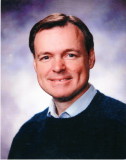
Interview with Elaine Alder
Description
Interview with Elaine Alder
Transcript
We're talking with Elaine Alder, our unsung hero, this week. And first of all, let's find out. What were your feelings when you first came to St. George when your family was about to make the move? Well, it came so quickly that we didn't have a lot of time to think. We moved from the green of northern Utah to the red of southern Utah, and that was kind of a shock. But we were so excited to come to St. George because our visits here had been so pleasant and wonderful that I don't think we had anything very negative to experience. One of the aspects of being the wife of the president of the college that sometimes is a little tough role to live with. How do you survive all of the pressures on the college family? Well, we have a good calendar system, which helps. We enjoy being involved. And I think that makes a big difference is the fact that the things that the college produces and presents and provides for people are the very same things that we have made a big part of our family even before now. I think probably the hardest thing for being the college first family of the college is the goldfish ball. And that's something I think we're getting used to, but we still find times when it's a little uncomfortable. Wherever you go, people know who you are. Yes. Even the very first week we came down here, moved in. My husband went back to finish his contract at Utah State, and I moved into the home with one of our children, and I went to cash a check, and the lady immediately said, oh, welcome to St. George. How do you like it? And I realized then that we were in a new position of being known for this presidency. I know that you've been very active in your own right. In addition to being the wife of the president, you've been a writer for several years now. Have you? I started writing professionally in 1980 after my children were all in school and I had more time to myself. And I have really enjoyed the experience of writing. I had a good career in Logan in which I wrote probably 15 to 20 articles a month for the newspaper there. I have also written for church magazines and for this people and now St. George magazine. And it's been a very nice change of pace, shall we call it? Were the feelings to be a writer there all along? Yes, I've enjoyed writing and I really enjoy magazines. I'm a real magazine reader, and I have had those since I was a child. I came from a home where literacy was stressed, and we did a lot of reading together. And so writing has been kind Of a second nature. It's been more than a hobby, but it's been a wonderful experience for me. Let's go back to your roots. Where were you born? I was born in Salt Lake City. I was the seventh of eight children. My family live mostly in northern Utah, but I do have two sisters in California. I grew up in a very loving, wonderful, caring home. Our parents were not well to do. My father, I don't know how he did it, but he was able to put all of us, help us through college. We all paid our way, but he was very encouraging. But we have a very tender family upbringing which was very good for all eight of us. And we are a very close family now. All of my brothers and sisters and I are very dear friends from Salt Lake City. You went to Utah State University or did you go to another school? No, actually my background is that When I was 15, we moved to Buell, Idaho. My father took some work there. He had worked in Salt Lake all his life for the church mostly, and was manager of Deseret Book and had worked in church assignments. But When I was 15, we moved to Buell for a year. And from Buell my father was called as mission president to the British Mission in London. And I was just barely 16, had just barely learned to drive. But we moved there and were there for almost four years. And you can tell from that age span that I should have been in high school. But by the time I got to England, there was no high school for me. And so I was called on a mission at 17. And I served a full time mission as my father's secretary until I was nearly 20. And then we had an unusual experience there. My mother was called home. I had a sister who became very, very ill. And so they called my mother home in March of 1955. And she and my younger sister came home. And I stayed with my father to be the hostess at the mission home with him. And I was also his secretary. And so they made me the Relief Society present so that I could travel with him to conference. I was 19 years old, and I must admit, it grew me up very, very fast. But we came home at Christmas of 1955 and I went back to Salt Lake to try and get some high schooling. Because I was almost 20 by then. I went to the alternative high school. And I had taken some classes in correspondence study to try and get through high school. And I had gone a year to an English school. So with all of that training, I still was not qualified to graduate from high school. So my Husband jokingly says, I'm a high school dropout, but I was an unmatriculated student at the University of Utah, and I was able to go there and complete a degree in journalism and business combination. And I graduated there in 1950 six months after I was married. From there, Doug and I stayed in Salt Lake for one more year while he completed his master's degree. And then he was awarded a fellowship to the University of Oregon and Eugene. So we took our newborn baby and moved up to Oregon for three years, and then from there we went to Vienna, Austria, for a year while he was a Fulbright Scholar at the University of Vienna. I learned grocery store German and managed to go to the grocery store three times a day like they do there. And then we came home and he had three job offers. One in Oregon, one in Canada, and one at Utah State University. And because it was the best of the three, we took that and we never regretted it because we were closer to our family and we had the grandparents for our children. And Logan was a wonderful, wonderful place for us to live and raise our children. And we lived there for 23 years and loved every minute of it. And then we moved to St. George. That's been the last six years. Was there a culture shock coming from northern Utah to southern Utah? Well, it's interesting. Doug and I have both said many times that St. George is really the flip side of Logan. It's just. It's a community so much. The people are so much like the ones in Logan that we have found the same quality of friends, the same kinds of opportunities, the same culture, a little bit different in size, but not much. The only big thing is the climate, and the climate has been actually better for us here. I've. I have had asthma, which has been improved while we've been here. The cold winters were getting very, very hard on me. But there was not a culture shock. It was more of a weather shock, shall we say? I really enjoy the warm weather of St. George. I love the beauty of northern Utah, and I really enjoy Logan at St George's Home. I know you've been involved with a lot of volunteer work. What have been the most fun things for you to do as a volunteer? As a volunteer? Well, I'll tell you, I've had a lot of variety with it. My first real volunteering was in a nursing home right after my parents died about 12 years ago. I had such a traumatic experience of trying to face their death nine months apart that I went to a nursing home for four years, every week to Try and help me understand the aging process and the suffering that they went through. And so that was a good experience for me. I have also done mostly volunteering, using my writing. I wrote for four years, also in Logan, a column every week honoring volunteers, and that gave me a wonderful experience to meet hundreds of super people of all ages as volunteers. Okay. The other. The volunteering I've done here mostly has been in on boards, serving on advisory boards with Women's Conference in Dixie, which I really am really excited about. It's a conference that Kathleen Pope started about seven years ago, and when I came, or eight years ago. When I came, it just had two years. But I have been very involved, mostly as a liaison between the college and the board. And then the other. I served for a while on the RSVP board both in Logan and in St. George, but when I had a little bit of a health setback, that was one of the boards that had to go. I did some writing for them, and I've been enjoying what I have done to help there. And then the other board that I've been on is the Dixie College Women's association, which is an automatic board that I'm on as a result of Doug's position as president. And I have served there as the second vice president, I think. And it's a board that meets and functions for the spouses and the women workers at Dixie College. And I've enjoyed through that. I have got to know everyone personally on the campus, which has been very helpful. And I also helped them set up a scholarship fund, which is our service project. As you look at the academic side, the life of living in the academic side of life, what has been the most enjoyable aspect of that for you in St. George? In St. George and in Logan, I would have to say probably the association that we have had with the students and with the faculty and staff here at the college, the involvement that we've had with all cultural events, lecture series, just having them in our home. We've had some discussion groups, book groups. It's sort of like having one big happy family. Everything that they achieve is really something that thrills us. It's almost like being their parents, although they are our peers. And as far as the academics go, every time there's a nice accomplishment, we feel a tremendous pride. We currently have people who are on sabbatical and people who are on grants. One of them is in Italy, just left this week. And their pleasure is our pleasure because we see them grow and we see them refine the other thing, too. I think is just to watch the changes that come about in people's lives. Oh, we see so much of a difference in students especially. We'll watch them come in as little freshmen and go out when we have the Presence reception like we did last Saturday. One of the thrills is to shake the hands of those kids and be able to tell their parents that we have watched them grow and we have really put out some outstanding students. As far as some of the things that you'd still like to do in your life, is there a particular article that you'd still like to write that you haven't? Something that you say, hey, this is a story I'd like to do? Oh, that's an interesting question, because I have a file that's called Articles I Want to Write. And I'm always stuffing ideas in there right off the top of my head. I'm not sure. I keep telling Doug I want to write a book about what it's like to be the President's wife, but I'll wait until the appropriate time for that. As far as people to be interviewed, I haven't thought of anybody specifically. One of the things that I have done in my life is written hundreds and hundreds of human interest stories. That's been my real forte. Whenever I meet someone that has an interesting aspect of their life, I say to myself, oh, I want to make the time to write that article. So there isn't a specific one in my mind, but there are a lot of people who are heroes that really deserve to be written about. I have written about very important people and unusual people, and I'm always on the lookout for a good story. Is there one particular subject, one particular person that you've. That you've interviewed that sticks in your mind is this was an interview that I'm really glad that I did. Yes, there is. And I'll mention how that happened. I had heard about a woman who had driven from Logan to Salt Lake every week as a volunteer for the church at the church, Temple Square. And I went to interview her for the religion page in Logan Herald paper. And in talking to her, I found out that her husband was in Africa, where he had become very involved. He was going over there to do some diamond mining. But when he got there, he found the poverty and the problems in that area. And he spent nine months of his life over there helping the people build villages and getting help over to them. That was a little story I came onto so innocently. And I did write the story up, not only for the Logan Herald Journal, but I did it for this People magazine and I was really pleased because that article came out in their Christmas edition which featured people who were good Christians without being terribly glorified by it. So that was probably one of my better ones. I've also done an article on general authorities who were first retired that has not been printed for various reasons, but that was probably one of the most refreshing ones because I met eight wonderful people who had just been retired after church service life and I found new insights into their lives. That's still in the computer. Has there been a surprise that has come out of your writing? Have you been surprised by anybody in particular that you found either some depth to or some lack of depth that you expected to be there? Yes, I have had a couple of experiences of interviewing people who I thought were really wonderful, great people and found that they did not have that much to offer when it came right down to it. Maybe it was my own interviewing process, but I have also found a lot of people who are kind of just the salt of the earth way in the background types who, when you get talking to them, find some real depth and real spiritual strength, real struggles and strivers as I call them. People whose lives have much more meaning than you would ever get from looking at them on the surface. And that's one of the joys of this writing, is discovering what life is all about. Let's talk a little bit about your family life now as wife and mother. How many children? How many grandchildren? We have four children. When we came to St. George, we had one son in the MTC on his way to Japan. One son who had been working in Logan and was living at home. Scott, our oldest and our youngest son, lynn, who was 16. Those two came with us to St. George. We dropped a note off to Nate at the MTC and told him that we were going to move to St. George and that was the first he knew about the change. He didn't come to St. George until two years later. But then our daughter Elise got engaged the day after we were appointed here. So that was interesting. We had to prepare her wedding plans and she was married on the 24th of November 1986. We did a long distance wedding for her. So those are our four children. Elise and her husband lived in Chicago for several years and have just moved back to Orem, which we're thrilled about. She has two of our grandchildren and Scott has our third grandchild and they live next door to us and we're really enjoying having them this close. Nathan has since married and he's living in Indiana, going to law school and his wife is going to to school there as well. Is there a philosophy as a mother that you wanted to impart to your children? Oh, I think probably the greatest thing I like to give to my children is a love for each other and for their fellow men and for God. Each of our four children is very different. I don't know how that happened, but they are, but they are very, they're good children, they're caring children. Each has his own challenges, personality wise. But I think for me, if I could get them to be honest and upright and have integrity, care about other people, those are the things that I would want to impart to them. I also like to feel that they want to be educated, that they want to keep alert in the hood of things and involved in community processes and especially to love their spouses. What about the future? Are there some things that you would like to do that you have not done yet? I do have some things on the back burner. I would like to spend a lot of time writing. I have a lot of unwritten things. I would like to do some more volunteer work, possibly with children. I really enjoy children and I would like to be involved somehow with early intervention or some type of, maybe the literacy program in one of the elementary schools. I feel very strongly about that. What I hope to do when we retire from this job is spend at least four hours a day doing some real writing projects and taking some time for myself. I do spend a fair amount of time now involved in planning meals and entertainments and just attending things. And so that does take a lot of my energy and just keeping the house and the yard up. But I think when things are modified, I don't expect to have a lot of trouble finding things to do because I have a lot of. There are a lot of projects that I have just put in boxes for lack of time. Elaine Alder, thank you for being with us. Congratulations on being an unsung hero. Thank you. This is really a privilege. Appreciate.
379
views
0
downloads