United Nations Commentary
Description
News commentary on the United Nations
Transcript
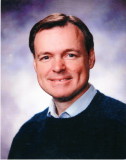
We are talking with Dr. Furmage of the University of Utah Law School. Dr. Furmidge will act as parliamentarian to this year's edition of Model UN here at the university. Dr. Furmidge, what experience have you had with the UN? I had some experience at the United nations in 1965 and 1966 as a member of the staff of Vice President Hubert Humphrey. I was serving on the Vice President's staff as a White House Fellow, a bipartisan position on his staff, and accompanied him to the United nations on several occasions. In addition to that, the White House Fellows, along with their working assignment with the principal to whom they were assigned, had some field trips. We spent several days at the United nations as the guest of Ambassador Arthur Goldberg and visited both the Secretariat and the US Mission to the United nations and, of course, the various organs of the United Nations. So I have had that experience primarily as an observer, though also in terms of staffing some of the work that had to be done for the Vice President in terms of his speeches at the UN and other matters of this nature. What was your general impression of the United nations in session? I was favorably impressed, I think, to some extent. My initial impression was, interestingly enough, that of some of the high school students in their initial impression to the model United Nations. Last year, as my first year as President of the General Assembly, I had a chance to observe the intense frustrations of some of the high school students who felt that procedural devices were always stopping them from getting to the substance of what they wanted to do, and they were intensely frustrated by this. I think the general feeling of a lot of people, and surely my initial feeling, at least without much appreciation of the problems, was that too, that there was a great deal of time spent in procedural niceties, a great deal of wheel spinning rather than getting to the substance of issues. On reflection, though, both in terms of what I would counsel young people at the Model UN and our own citizens in terms of the United nations itself, these procedural niceties are more than that. They're very important. These are the ways that we distinguish our democratic process from more totalitarian methods, and they're very important in their own right. While you were at the United nations, are there any particular experiences that stand out in your mind? Oh, I think the main experiences that we could have on that short duration would be analyses and evaluations of people. I was very impressed with Arthur Goldberg as a very successful negotiator, a man probably more effective outside of UN sessions than in them. He was not the. He is not the intensely articulate man that Adlai Stevenson was. For example, in his speeches before the UN they were much less impressive, more dreary, more drab. But in his arm twisting, in his negotiating in the halls, in his behind the scenes negotiation, which is, I think, on the whole, really more important than what goes on in the sessions themselves, he was very, very effective. I would say probably more effective than Mr. Stevenson. Did you find a difference between the delegations of certain nations, some of them taking the UN Seriously and some of them not? Yes. Several states have abused the United nations, have not paid any attention to its charter, have been much more concerned with getting its particular way on a particular issue, rather than watching what this impact may have upon the charter of the United nations and the institution as a whole. On the other hand, several states have been very, very careful about the United Nations. The Scandinavian countries have been very instrumental in the foundation of the United nations and have a very good record in its preservation. In connection with the model UN you mentioned that oftentimes the kids coming into this model UN will have the same experience as neophyte, if you will, in the real United Nations. What do you think are the benefits of high school students participating in a program like this? I think several benefits stand out in my mind. First of all, they gain an acquaintance with issues that they haven't thought of before. They talk about issues of war and peace, issues of international finance, all sorts of international policy issues. More important than that, they think of them from the perspective of a country other than their own for a change. I think the usual selfish attitude that we would all have, either on an individual or a state basis, is overcome to some extent by forcing these kids to think of the feelings of someone from England, someone from Germany, as well as someone from the United States. This opens up a whole new perspective and international understanding to them to have to think of these things from the standpoint of someone other than that state which they've been used to identifying with. Now, we understand that this model UN program, this is the 15th year here in the state of Utah. Do you see any change in the attitude of the citizenry now as compared to when it started? I couldn't really respond to that well because I wasn't associated with it at its foundation. My first association with the model UN here was as of last year, so I couldn't comment in terms of perspective. Going back to your previous question, however, there are a couple of other matters that I think make the program of considerable value. I made brief reference to the frustration that some of these kids feel as they have various motions put before them to delay getting to the substance of an issue to which they want to speak. I think this is their first real lesson in democracy. You see older kids of our own time on some university campuses causing a great deal of ruckus because they feel that procedures that are established are of no worth. I think if children of high school age can understand that these procedures have real value and I think they come to see this by the end of their two day session that they will have had a very valuable lesson in democracy. The United nations, apart from this may be a loaded question, but do you find this just as beneficial to the kid who has grown up in a background of hating the UN as to the kid that grows up accepting the un? I think it has a very beneficial effect on both. For the young person who has grown up hating the UN without probably any reason to hate it or love it, just an absence of knowledge, he gains an acquaintance with some real issues and sees some purpose of the un I think he will tend to moderate his views. For the young person who grows up perhaps super sold on the UN he too may find he has to moderate his views. The United nations, in my opinion, as an institution, not the model UN, but the United nations itself was drastically oversold when it was initiated. It more or less had to be done. Franklin Roosevelt watched Wilson lose U.S. participation in the League and he vowed he wouldn't lose US participation in the un so he sold it. And oversold cannot handle all of our foreign policy problems. It was never meant to. It was sold, however, on the basis that it probably would. I think the young kid who grows up as a super supporter of the UN finds within the model UN some of the limitations that are actually within the parent body. Dr. Furmidge, do you find the idea of the UN as a sounding board for problems of the international relations sort? Do you find this effective in the real un? Yes, it does have real worth here that there is an area where there is a standing body of conciliation where nations can come and voice their complaints and have some standing in session negotiating body rather than some ad hoc conference as marked the last century. In the first part of this, however, I think the United nations is much more than that in terms of its delimitations. Of course, it was never meant to be a body of sort of world government to police differences between the United States and the ussr. Some people have had great disillusionment with the UN because it didn't resolve differences by force, perhaps between the US and the USSR or perhaps enforce our wishes upon them. That could really never be in terms of realistic assessment of power in the world today. But it is a very effective instrument, or it can be a very effective instrument in settling problems in which there is some area of agreement between the US and the USSR. It is the parent body, for example, of the 18 Nation Disarmament Commission that is now meeting in Geneva and which recently finished negotiating and drafting the Non Proliferation Treaty. This is one example where the interest of the USSR and the interests of the US met. And when you have that, then the Security Council and the General assembly and all of the organs can really function as they were meant to do. But it can't get into the area of taking a major position upon which the US and the USSR are diametrically divided. If you don't mind, I'd like you to respond to one of the chief criticisms of the un and that is that it is actually a blueprint for world government and these people fear losing the sovereignty of the U.S. could you respond to that? Well, this must be made by those who don't know anything about the United nations simply because it appears so ludicrous to those who do know something about it. The United nations is based upon the idea of the sovereign equality of states. This may be a detriment, actually. But in terms of those who would be critics of the UN from the point of view that you mentioned, this must be something of an asset. Surely a better criticism of the UN is that it doesn't have effective power, not that it has so much power that it is in danger of becoming a world government. It was never meant to be a world government. It was never meant to infringe upon the sovereignty of the United States or any other state, and in effect doesn't. Perhaps there are areas in which national sovereignty should give way more than it does. We are in a condition of, I think, closer approaching international anarchy than we are in any condition of threat of world government being imposed upon us. To the United nations. Thank you, Dr. Furmidge. I appreciate your time. Thank you. And now we return to the main body of the General Assembly. We are talking with Dr. J.D. williams, professor of Political Science here at the University of Utah and at one time an enthusiastic but unsuccessful candidate for the Senate of the United States. Dr. Williams, what committee will you be presiding over this year? I'm chairman of one half of the Political Security Committee of the General assembly, one of the Standing Committees of the Assembly. How long have you been connected with a Model UN? I guess you'd say from day one, really. The first one was held in 1955, and I was the president of that General assembly And for the 12 others that followed it. And my Senate campaign last spring then interrupted the long series. And a very able fellow from the law school, Professor Ed Furmage, then took over the presiding officer's chair last year and again this spring. What do you see as the benefits of the program to these high school students? I think from the very beginning, those of us who have been tremendously involved, both the high school advisors and the staff of the University of Utah have had three goals in mind, not in any necessary order of priority. One was greatly to enrich in the social science curriculum of the high schools by giving students this five month opportunity to delve in depth to the economics and the politics, the geography, the trade patterns, the military needs, the diplomatic relations of some major countries around the world, and in that way really provide some intellectual excitement for the social studies curriculum. Secondly, we thought that it would be a splendid opportunity to lift the sights of high school students in Utah to give them a pair of binoculars through which to look at the world. Whether you want to put it in terms of a world viewpoint or some kind of a sense of international relations matters not. We simply felt that in this day and age when international relations are so critical, that this kind of a model UN would be extremely useful in giving them a touch point with what's going on around the world and in this world. And then third, and considerably of less importance, to give those who would come here a very great forensic experience. Very different from a debate tournament, the open swinging kind of joust over issues that you'd get in the House or Senate of the United States. And these students get a great deal of that in the plenary sessions of the General assembly and of the Security Council. Do you find that these goals have been achieved? I'll say they have. What about service to the community? Do you find an increased acceptance by the community of the model un? Well, that's hard to judge. We, of course, have never run any public opinion polls. In the beginning, we had very little difficulty. Everyone was excited and the high schools responded. And I recall very little static the first three or four years. And then about 1960, 61, when the birch Society began to make its appearance in Utah, the model United nations became a bit of a political football and the Birchers went after it hammer and tong, sometimes working directly on the university, more often working on high school principals and parents of students and so forth to try to discourage their Participation in this activity. The year that we had the Nobel Peace Prize winner, Dr. Ralph Bunch as the keynote speaker, a Birch Society front called the Citizens Information Committee put out a diatribe attacking this man, painting him into a communist corner, which he has never been. And in that fashion and in other ways attempting to embarrass this kind of an operation. The Model UN has not stopped in the face of those attacks. And while I was not closely involved last spring, my general feeling is that the attack has softened a bit the last two or three years. We find some of the criticisms of the Model UN simply centering around the idea that you're actually indoctrinating the kids to believe in the UN when it is really a no good instrument, if you will. Could you answer those? Yes. That puts the criticism very well, I think. They do come here and they do engage in role playing. They take the stance of the country that has been assigned to their school. They try to get their resolutions through. Most of the resolutions, of course, are defeated, as is almost always the case with legislative bodies. So they have a very real exposure to the general troubles that beset any kind of a parliamentary institution. In terms of their getting brainwashed with the UN as an effective instrument. I'm rather convinced that that does not happen. I think many of them go home frustrated with how little they've been able to accomplish, mad at what some other countries have done to them. What they go home with then is. Is this kind of increased awareness of how extraordinarily difficult it is to put what might be called the package of peace together. They've had an unusually realistic exposure to the problems of international relations, finding compromises that the various blocks of the world would be willing to go along with. I don't think that very many of them go home at all from this kind of experience thinking that they have just had a weekend in utopia, that they have just had a brief flirtation with some kind of a panacea. They have seen reality. And as we all know, I suppose reality is not always a very pleasant and admirable kind of thing, even if the kid is not firmly committed to the un. In fact, if he is against the un, do you still see benefits from, for him participating in the program? Yes. Going back to the purposes I talked about a minute ago, of more meaning in social science studies and broadening a person's viewpoint in the forensic experience, the kind of young conservative, probably that you're talking about, I would think may not have had his world viewpoint enlarged, particularly. He may just have closed off some of the opportunities and the avenues for exploration that are here. But if he's done his homework, he will know an awful lot more about that African country that he is representing. And undoubtedly he will have found some of his ideas thoroughly mauled and challenged in the interplay of debate. And through at least those two things he will have derived some benefit. Looking to the actual work at the model United nations, do you find that the model UN conforms quite closely to the UN's work as a whole or do you find great variances? I'd say a very good fit. Perhaps the chief departure is with some ill prepared high school delegations who have not really thoroughly researched the policy positions of the countries that they represent. Then the role playing does not come off very well. But in terms of the structure, each year it gets closer and closer. The veto in the Security Council, the non existence of a veto in the General assembly where it requires a 2/3 vote and where it requires a majority vote, the method of introducing resolutions, the satellite agencies of the Economic and Security Council, all of these. I think I said that wrong. Economic and Social Council, excuse me. All of these things follow very closely the blueprint of the actual un. Shifting to the actual un. Can I throw you a haymaker? Try me. What do you see as the issues facing the UN now, the most important issues? Could you pick out four or five of them? Number one and one that frightens me deeply, the tendency of almost all of the powers in the world to circumvent the UN to ignore it. Currently, you see, we have this tremendously dangerous situation in the Middle east and what are we talking about? Some kind of a four power settlement that with some degree of insistence, perhaps the big powers, if they could come up with the magic, would want to impose on both the Arab and the Israeli government governments. This is exactly the kind of problem for which the UN was designed to deal with threats to aggression and threats, I didn't put that correctly, threats to the peace and instances of aggression. So that's the first problem I would say, and that is this business of simply running behind the back of the UN and not utilizing it, that will kill the UN by disuse. Then secondly would be a couple of the actual problem areas of the world. The Middle East I have referred to Vietnam would be still another. Outside of the area of military conflagration, we've got the increasing problem of world population pressing against world food supplies. And then there will be the steady problems that year in and year out will confront the associated specialized agencies of The UN privation and disease and hunger and matters of this sort. Those, I think, would be some of the great ones. Senator Edward Kennedy has come out in a speech not more than about a month and a half to two months ago endorsing the acceptance of Red China into the U.N. do you see this as a possibility in the near future? I think it'll come. If you asked me what the vote was last year once again to deny them seating, I don't think really I could tell you so in terms of having a headcount in front of me on which I could base that kind of a prediction, I don't know. But as the realization develops that the government of some 650 million people on mainland China is the Communist government at Peking, and increasingly, as that government gets the weapons to wreak havoc upon so many countries of the world, I think that statesmen are going to have to conclude we've got to talk with them. This may really be our best assurance that we will not have to fight them. You see, the United States that does not have diplomatic relationships with Peking has diplomatic relationships with Peking's representative through our ambassador in Poland, which is recognition enough. You just cannot be indifferent to the government of 650 million people. Senator Kennedy believes, and I said 10 years ago, that I think we've got to regularize this kind of relationship. And the place to do it is with the exchange of ministers in Washington and Peking and also their acceptance into the United Nations. And if one needs to have an argument in terms of our vital national interest, I hate to put it on this ground, but it would be one of the benefits simply for the opportunities for observation and, to use an ugly word, espionage. Why we should have to be dependent upon observers for other countries that have diplomatic relations is kind of silly to me. We ought to have our people in Peking and be able to see for ourselves and conduct direct consultations. It's a joke to pretend that something is not going on among Those, excuse me, 650 million people that we can afford to ignore. Now, I'm going to ask you a question about one of the criticisms of the un. The real un, many people have said, said that this is really a blueprint for world government and that if we follow in the UN that we will lose our sovereignty, as will many of the other nations of the Western world. How could you answer that, Mr. Jewell? Let me begin my answer by asking you a question just by way of airing the issue for our radio audience. By way of analogy, somebody could say that the little constitution for the Articles of Confederation in this country, which in essence operated from 1778 to 1788, was a blueprint for national government. Now, would that be correct or false from your recollection of American history? I would tend to think so, yes, as people could say that this would lead to it. But it certainly did not lead to national government, not the Articles of Confederation. They had to change the Exactly. And the weaknesses that arose under the Articles really produced the Federal Constitution in 1787. And yet the Articles held us together as loosely allied states for those 10 years, provided some idea of union, concluded the war with England and gave us the Northwest Ordinance for a pattern of growth. So how should we view the United nations in the larger sphere of the world with its far more diverse cultures and economies than the 13 states or colonies would have had on our Atlantic seaboard? That's really very hard to say. I accept the proposition that whenever people intend to live together communally, that either each man is going to have to be his own army and his own court, as Hobbes viewed in theorizing about the state of nature, or you are going to delegate to community powers, in a simple word, government, police forces and judicial powers to deal with those who will violate the law. Now, increasingly, communication and economics will build a world community. It will be culturally far more diverse than anything we've known in the states for sure. But clearly we are going to have to deal with weapons control, with the rationalization of international commerce, with dealing with the problems of world poverty and growth rates. Other things that can so deeply unsettle our experience here on this globe. That the United nations might evolve into a world federal government is a possibility. Its charter would have to be radically altered. As we both said, the Articles of Confederation was radically altered to become the Federal Constitution in 1787. So in terms of whether or not that will be the mother institution of a much strengthened international organization, I don't know. It may be, as George Washington said in opening the Constitutional Convention, perhaps another great and dreadful conflict must be some sustained before, you know, we will have learned our lesson. But I would suppose over a hundred years, if we were around to watch it, that we would see the strengthening of international organs to deal with the areas of the transportation of arms, the building and the sale of arms, and perhaps an increasing centralization. I'm not talking at the world level. And increasing centralization of police forces more effectively to deal with the matters of aggression, including brush fire wars. I do think that the trend is in that direction. Well, we're out of time. Dr. Williams, I want to thank you for the time that you've taken to meet with us here. And I want to thank you for the assistance that you have given to us in our production here. Thanks very much, Mr. Jewell. And now we return to the General assembly of the Model United Nations.
450
views
0
downloads