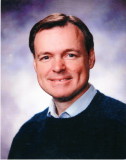
Larry's Funeral
Description
Larry's Funeral
Transcript
Bishop Woodbury [Conducting]:
Brothers and sisters, friends, neighbors, we welcome you here to the funeral services for Larry Martin Jewell. Presiding is President Darrell Whitney. I am Bishop Woodbury and will be conducting these services at this time.
We will begin this morning under the direction of Sister Irene Rodeback with Donya Ullman on the organ by singing hymn number 129, Where Can I Turn for Peace? After which we've asked Brother Tab to offer the invocation.
Brother Tab [Invocation]:
"Our dear, kind and gracious Heavenly Father, we are indeed grateful for the proceedings of this day. We welcome you, Larry, to thy arms for the blessing which he has been to everybody here. We ask that comfort may be with us, that we may understand the reasoning and that we may not be troubled. We may actually celebrate his wonderful life. Say these things humbly in the name of thy Son, Jesus Christ. Amen."
Bishop Woodbury:
Thank you, Tab, and thank you, Sister Ullman and Sister Rodeback.
Larry Martin Jewell graduated from Olympus High School in 1965, then earned a B.S. degree in political science at the University of Utah. He began his radio career there at KUER Public Radio. Following graduation, he worked as a radio personality in Sydney, Nebraska, Brigham City, Utah, and KDXU, KCSG, here in St. George. During his career, he was the voice of Dixie College for 18 years, as well as calling games for many of the area high schools. He was the announcer for the St. George Pioneers baseball team for three years. He loved sports, but baseball was his first love.
Dixie College also employed Larry as an ad hoc professor for radio broadcasting, and he managed the college stations for three years. He acted as sports information director for the college for one season as well.
Larry dedicated his life to serving his family, church, and community. He served in many church callings, including high council, bishop, stake mission president, and his favorites were gospel doctrine instructor and home teacher. He loved announcing for community events, such as princess pageants, animal shows, county fairs, 4-H events, and volunteer Little League umpire. He served as the chairman of the board of directors of the Southern Utah Federal Credit Union for several years.
He loved people and was a great influence for good in many lives. As a member of the Color Country Chorus for over ten years, Larry loved to entertain and was often called to emcee the annual barbershop show, showing off his great sense of humor and trademark smile with dimples and all.
Above all, he loved his family. He was always there to support them, his children. He encouraged learning, the love of sports, and the arts. Even when disabled and wheelchair-bound, he was a great father and grandfather. The courage and cheerfulness he displayed during his three-year bout with cancer was an inspiration to many.
He is survived by his wife of 30 years, Pamela Lee; his daughters Tamara, married to Tad Raven; April, married to Jason Hinn, and a granddaughter, Gracie Jo Hinn. A son, Skyler Jewell, is also survived by his sister, Marian, married to John Nichols of Gilbert, Arizona, and a brother, Marvin Jewell, married to Donna Hatchfield of Salt Lake City, and the children of his brother and sister. He was preceded in death by his parents, Argyle E. and Grace Wilcox Jewell, and twin brothers, Ray and Roy Jewell.
We will now be privileged to hear from President Donald Hinton, who Larry served as a counselor under when he was Bishop Hinton. After his remarks, we'll hear a song sung by Skyler Jewell, Beautiful Savior, accompanied by Pat, Melissa, and Larry's brother, Marvin, and Amanda Lynn. From their conclusion, Brother Marvin Jewell will be the concluding speaker. We'll proceed for that time.
President Donald Hinton:
Pam and family, I'm honored to be able to take a few moments and personally express my love and appreciation for one of the great influences in my life. My association with Larry Jewell has been for about the last 26, 27 years. I came back to Dixie College and at the time thought I was going to be here for just a year, and I was given an opportunity to take over the public relations portion of Dixie College's operations.
I can remember my first set of news releases. I went out to distribute them to the various radio stations. I'd go to the various places and you were just kind of seen as a faceless person moving in, dropping something in, and going on. But when I went to KDXU, it was different. That was my first introduction to Larry Jewell, and he stepped forward and shook my hand, talked with me. Before long, I really thought we were related. And I think that's the way he was with everyone who knew him. He had a way of finding ways to be related. If not, he knew somebody who was, and then they were off and running.
I appreciated him in so many, many ways. Obviously, those of us who have been here any length of time know that the voice of the Dixie College Rebels was Larry Jewell. I loved listening to him call the games. I had opportunities sometimes to go into the little cubicle where he would be calling the game, depending upon where he was, and watch the operations. I was amazed at what he could get done. He frequently would be the lone man for his station, and there'd be two men for other stations, and they'd be coming over and asking him, "Well, what happened? And who was that? And they've got this number down there. Is that really the person?" He just had a way to ferret that out. He just had a sense for what was going on, an ability to pick up and identify.
I talked to one of them. I was up at College of Eastern Utah one time and talked with a fellow who was a radio broadcaster there. He said, "I've never known anyone like Larry Jewell." He says, "I could have three people feeding me information, and I still have to go to him, and he's operating alone. I don't know how it is. He'll take a list of names that he doesn't know, you wouldn't think he'd know anything about, but he had something about their high school experience, and he didn't have to look at the sheets. He just talked." But I think that was Larry. No one was a number. Even though he could rattle stats about people forever, they were embedded in a personality that was someone. And whenever you met him, you felt that way.
I remember the references to his being an adjunct faculty at Dixie College and running the radio station. Most people don't know the way Dixie College grew—it kind of grew up with a faculty member who would say, "You know, we really ought to have a radio station." They'd say, "Well, how much is it going to cost?" The faculty member would say, "We don't have money for it, but I think I could talk to somebody who'd get us a little bit of equipment, and maybe if we could get somebody to go over and help us wire it, we could get it going. I'll just spend extra hours to do it." And that's the way the Dixie College radio station came to be.
Well, so what happens when that faculty member leaves? As things would happen, I was the department chair when all of a sudden there was nobody there and no money to run the station, and the station was about to be closed. And that's when I talked to Larry. There was very little money to run things on, and he understood things that way. A radio station at a college is a way to get a college in a lot of trouble fast. You put a youngster behind a microphone that's going out on the air, and it's a great time to do things and say things, but he never allowed that. And he didn't do it with a heavy hammer. He just worked with them, talked with them, and they responded. During his years when he was there, we didn't have trouble, and he helped us in so many ways.
Where I think my greatest strength is, I remember when I was called as a bishop of the newly formed Washington Fourth Ward, and I spent my time trying to figure out people I didn't know, and who would be my counselors. Brother Jewell's name came to my mind, and the confirmation came very quickly. And he was a tremendous counselor. I marveled many times. I can remember those days after our church meetings, and I would be in interviews, and out of those interviews sometimes grow problems that you've got to deal with, that you need help with. And I'd open the door, and almost always Larry was just outside the door talking with the next person, waiting for a long-winded bishop to get ready to let him in. He was there to take care of things. And I'd say, "You know, Larry, you don't have to be here." He'd reply, "But I know you're going to need some help."
His comment to me, as we would get together and discuss things, and then we'd kneel down to pray and seek guidance—we'd get up off our knees, and he'd always say, "I'm the Martin Harris of this bishopric." I tried to reassure him he wasn't. And of course, five years later, when "Martin Harris" got his call as bishop, he couldn't use that line anymore. He had to come out from hiding and quit being a closet spiritual.
One of the things that was marvelous with him is when, as a bishop, sometimes you deal with people who really are very, very unhappy. I can remember going into one good member's home. His wife was active and the man was not, but the wife was there every Sunday and was just a wonderful soul. We would go out periodically and visit homes, and we went into this particular home, and the husband was really cold, hostile. He let me know that we hadn't had home teachers for X amount of time, and this wasn't going well, and what did I think I was doing? It was just kind of a standoff.
But it only took Larry just a minute or two. He was related to somebody, and he just tied in. We left that home that night, and I turned to Larry, and I said, "I'm going to make a change. You'll be the home teacher in this home." And he was, and the man came back to activity. It was the magic of Larry Jewell. He knew how to touch people's lives, not because he wanted to accomplish something, but because he cared. He liked people. He enjoyed being with them. I love the easy smile. That smile is stuck in my mind every time I see him. No matter what it was, a comment or two, his smile would lighten things up, and pretty soon that was the dominant influence.
He used to tease me all the time that my meetings ran too long. I would leave him in charge, and invariably, as I'd come back, he'd say, "We finished in 30 minutes." It was incredible. I was worried about that until he became bishop, and his ward members started telling me how long their meetings were. Then it kind of came back!
He was the one we had when I was bishop who renamed my kids. We had three boys born to our home, and my wife and I labored diligently to come up with what we thought were the appropriate names, but none of them ever suited him. He took one look at our eldest son, and he says, "He'll be Buster." Our next one was "Big Al," and the next one was "Doc." He never would call them by Darren or Adam or Dustin. They were Buster, Big Al, and Doc. That was just his way of making them his. He was in great nature one of the really important people in this world who never pretended to be important, and there are far too few of those.
I'm deeply grateful I was privileged to be part of his life. We all mourn at this point for his passing. You know, these funerals really are not for the deceased—although if I know Larry, he's here somewhere, and he'll be chuckling and remembering. But it's for us. We who love and care and miss the presence of one of the great people in our life.
But death serves a very important purpose. Death is the great reminder that what we are doing in this life is temporary, and there is a larger purpose. I think one of the most difficult challenges that I can picture anyone going through would be to have Larry go through the loss of his ability to communicate—to have a brain that is capable of processing and understanding, and his inability to share that. As we've lived with him, you know, three years ago, it would have been almost impossible to let go. It's still extremely difficult. But all of us know that the prison that Larry was forced to live in was not a prison he enjoyed. He loved to talk, he loved to relate, he loved to engage. He's now free to do that.
The Doctrine and Covenants, section 93, tells us that the union of the body and the spirit into that soul is the fullness of joy. But a restricted body is not a joy. He's been through that, and now awaits that time when he'll be able to have that body back with a promise that it's not been given the problems that he had here at the end. If there's any kind of sports on the other side, I'm sure he'll be giving part of the play-by-play.
Elder Neal A. Maxwell—who was one of Larry's professors in college—made the statement, "We spend our time deeply engrossed in the important at the exclusion of that which is essential." I think one of the things that death provides for us is a wake-up call to some of those essential things. I know after the call that we received that let us know that Larry had passed, I haven't been able to see my own children the same way.
John Taylor made this rather significant statement: "It is a gospel that teaches them that when they rise from the tombs in the resurrection, they will again clasp hands, be reunited, and again participate in that glory for which God designed them before the world was." I take great solace in that. These are principles that Larry believed and understood with all his heart. Death has been conquered. Larry still lives, and we will yet have a chance to see and enjoy his community again. And I pray that each of us will prepare to be able to do so in the name of Jesus Christ.
Musical Number [Skyler Jewell]:
Fair are the meadows, fair the woodlands,
Robed in flowers of blooming spring.
Jesus is fairer, Jesus is purer,
He makes the sorrowing spirit sing.
Fair is the sunshine, fairer still the moonlight,
And all the stars in heaven above.
Jesus shines brighter, Jesus shines purer,
He brings to all the world his love.
Beautiful Savior, Lord of the nations,
Son of God and Son of Man.
Thee will I honor, praise and glory,
Give praise and glory evermore.
Give praise and glory evermore.
Brother Marvin Jewell:
Well, while I'm up here, I might as well give a talk. Did you have fun? Serves you right. I'm doing better than I should. If you don't mind, that will be nice. Can I help? Thank you. Yes. His favorite song, La-dee-dah. He could sing that in any key. Took me for a few walks since last year. He sang that song the whole time we were walking around the block. La-dee-dah.
Larry always said that baseball was made from the heavens. He said the very first sentence in the Bible was in Genesis, and it talks about "in the big inning." He loved Yogi Berra and Yogisms. One of them was, "When you come to a fork in the road, take it." I kind of broke up Larry's life like a ball game. I'd like to start out with the first inning.
I'm probably the only one that remembers him in this time. First of all, I'd like to tell you how he got his name. Just before Larry was born, a very popular show came out called The Al Jolson Story. And the actor that played the part of Al Jolson was Larry Parks. Mom enjoyed that show so much, she says, "I'm going to name our baby Larry." Dad didn't like Al Jolson, but Mom did, so she won out. How he got the name of Martin? Our sister is Marion, I'm Marvin, and she says we have to have another "M."
But the first experience I had with Larry was when he had just come home from the hospital. He was the only one of us kids that was born in the hospital. We always felt a little bit envious of him for that. Dad picked Larry up like this, "You cute little guy," and he let go with a right down Dad's shirt. Not down the outside. Dad always wore a loose collar. He made his first hit, and boy, did he nail Dad. Last I saw, Dad handed Larry to Mom and was holding his shirt away from him.
Let's go into the second inning. This is when he was about four or five years old. He and I used to sit out on the front porch and I used to teach him the name of cars. He just loved cars. I would teach him all the names of these cars and he had a photographic memory back then. I would make bets with my friends when they came along. I'd say, "I'll make you a bet that the next car down the road, Larry knows the name of it." I wasn't a gambler, but I knew how I could win these bets. He never failed me. When he was about five years old, I used to take him on dates with me. Now that sounds kind of strange for an 18-year-old kid to take his little four-year-old brother on dates with him, but it always kept me out of trouble. Donna's mom said, "How come Marv always brings his little brother over on Sunday afternoon?" "Oh, he just wants to bring his little brother along." We had a lot of nice rides and it got him away from Mom and Dad for a little time to themselves.
Let's go on to the fourth inning. He was five years old at this time. He liked to take walks. He and the little neighbor girl decided to walk uptown. We lived on 39th South and 5th East. I was coming home from college this one day, and as I came down to the street, there were police cars all around our house. Mom was crying and she says, "We've lost Larry. We haven't seen him since about 11 o'clock this morning." This was like three o'clock in the afternoon. Dad was a member of the Utah Rangers Riding Club and brought his friends around on horseback to scour the canal and the neighborhood.
As it so happens, he had decided to go see his sister up at ZCMI. So he'd taken his little neighbor girlfriend and they decided to go for a walk. Fortunately, a woman at her office wrote down the description of these two little kids. As she was coming south on State Street, she saw them walking east at about 5th South. She stopped the bus driver, the bus driver caught the other bus coming up the other way, and said, "Take those two little kids up to the police station." That was the first time he got his picture in the paper—hiding under the desk at the police station with his little girlfriend.
Let's go on to the fifth inning. He was about eight or nine years old and started to play ball. Little League was just getting started, and games were being broadcast on television. Larry would lay down in front of the television, but he didn't just watch a ballgame. He had a piece of paper there and he'd keep the score. He loved to be a statistician. One of his favorite announcers was Dizzy Dean, who used to broadcast and murder the English language.
The sixth inning. He loved to play baseball, but his first sport wasn't baseball. He loved tetherball. If you ever noticed Larry's little fingers, they were always a little bit crooked. That was from playing tetherball, hitting that ball with the side of his hand. He damaged the cartilage in his little fingers, and that's why when you'd see him talk, you'd remember his little finger was kind of crooked.
When he started playing baseball, he wasn't a fast runner. He was just a little bit on the lazy side. He said, "I'd rather walk around the bases than run." So he timed the ball and became a very good hitter. Even in Little League, he was the clean-up hitter. He said, "If they don't let me hit, they walk me, so then I can walk up to the bases." He had a pretty good system going.
Let's go on to the seventh inning. He got pretty serious about baseball and played in the Babe Ruth League. Then he went on and played high school ball, and then American Legion. He usually played first base, but they also used him as a pitcher. In fact, he played catch with Dad one time and broke his little finger. If you remember, Dad always had his little pinky dropped. That was from Larry hitting him on the finger with one of his fastballs.
The eighth inning. This is when he started his career, and he met Pam up at the university in a communications class. At about that same time, he was working at KUER at the university, and he found that he had a love for speaking. He started developing a beautiful baritone voice. Even though he graduated in political science, he loved to do interviews with political figures down here. After he graduated, he moved to Sydney, Nebraska, for his first radio job. Pam was here, he was in Nebraska, and the phone bills went sky high. So finally they got married, moved to Brigham City, then down to St. George, and most of you know the rest of his story. Raised a beautiful family, became the voice of Dixie.
Let's go on to the ninth inning. Larry never got the big break that he always wanted in broadcasting. He certainly had the ability to call any of the games on a professional level of the big leagues, but he wanted to stay in the small market. He told me one day, "I love the small market. This is a small, close-knit community. I feel that my family will have more opportunities in this small market than going into the big city."
Let's go on to the last of the ninth inning. Let's say Larry was at bat, the score would be tied, maybe there were two outs. He didn't strike out, but I'd look at it like this: he probably got hit by a wild pitch and got taken out of the game. To do kind of a wrap-up here, he did reach his dream. He became the voice of the pioneers. He gave 92 of the 95 games that were broadcast.
Two of his prized possessions—he wasn't a materialistic man, but two of his prized possessions were his wedding ring and his camera. I think they're with him now. He loved his family, his religion, he loved a good joke. He loved life. He loved all of you. To finish up with Yogi Berra, it ain't over till it's over, and he took the fork in the road to carry out here. And then there's Jesus Christ.
Bishop Woodbury:
Thank you, Skyler, for that beautiful song that you've sung for us. Thank you, President Hinton, for those great remarks, and Brother Marvin Jewell. We appreciate your great examples and your tributes and your words of consolation this day.
In the printed bulletin, there were two honorary pallbearers' names that were left off. Douglas Nichols should have been on there, and also Michael Duncan, in addition to the ones that are printed on the program. After my remarks, a closing prayer will be offered by Jason Hinn. The interment will be in the Murray City Cemetery on Tuesday. Immediately following these services, the family is invited to go down to the Telegraph Chapel where the Washington 11th Ward Relief Society has a meal prepared for you.
We appreciate all those that have taken part this day in the music, those that have offered prayers. And on behalf of Sister Jewell, who asked me to express gratitude and thanks to those that have spent countless hours these past few years in service for Brother Jewell and for them: thank you so much.
Now, Sister Jewell, for you and your family, in the hours and the days ahead, amidst the heartache and the sorrow—which is very, very real, which is also very, very needed to help you heal—I would encourage you to draw closer to your Heavenly Father and His Son, Jesus Christ, who are the true source of comfort and peace. It is true that you'll have neighbors and friends that will try to lighten your burdens. But my counsel as the bishop to you at this time is to seek that comfort that comes through the Savior and the Redeemer of the world. He loves you perfectly. He knows you. He knows your needs and will comfort you.
Like Larry Jewell, the radio announcer, used to say, "Take care now, you hear?" But like Larry Jewell, the bishop, and the great gospel doctrine teacher he was, used to always say at the end of his class: "I testify the gospel of Jesus Christ is true. I testify that Joseph Smith was the prophet of God. I testify the Book of Mormon that I love is true. I testify that the Lord lives and loves each one of us, and through each one of us we can be saved." And lastly, he would say, "I testify I love you, and I will see you again." In the name of Jesus Christ, amen.
Congregation [Musical Number]:
O Lord my God, when I in awesome wonder,
Consider all the worlds Thy hands have made.
I see the stars, I hear the rolling thunder,
Thy power throughout the universe displayed.
Then sings my soul, my Savior God to Thee,
How great Thou art! How great Thou art!
Then sings my soul, my Savior God to Thee,
How great Thou art! How great Thou art!
And when I think that God, His Son not sparing,
Sent Him to die, I scarce can take it in.
That on the cross, my burden gladly bearing,
He bled and died to take away my sin.
Then sings my soul, my Savior God to Thee,
How great Thou art! How great Thou art!
When Christ shall come with shout of acclamation,
And take me home, what joy shall fill my heart.
Then I shall bow in humble adoration,
And there proclaim, my God, how great Thou art!
Then sings my soul, my Savior God to Thee,
How great Thou art! How great Thou art!
Jason Hinn [Benediction]:
"Our dear Father in Heaven, we're grateful at this time to be able to come together as family, to be able to feel Thy Spirit. We're grateful to celebrate the life of Larry Jewell, to be able to send him off on his way, to begin his missionary work, the missionary he always planned on doing. We're grateful for Jesus Christ and for His sacrifice. Because of that, we know we will see Larry again. Please bless us as we depart, that we might go in safety, be able to keep the feelings we have now, and be able to continue on through the rest of this day in our lives. Again, we're grateful for our many blessings. We say these things in the name of Jesus Christ, Amen."
(Could all please arise?)
Brothers and sisters, friends, neighbors, we welcome you here to the funeral services for Larry Martin Jewell. Presiding is President Darrell Whitney. I am Bishop Woodbury and will be conducting these services at this time.
We will begin this morning under the direction of Sister Irene Rodeback with Donya Ullman on the organ by singing hymn number 129, Where Can I Turn for Peace? After which we've asked Brother Tab to offer the invocation.
Brother Tab [Invocation]:
"Our dear, kind and gracious Heavenly Father, we are indeed grateful for the proceedings of this day. We welcome you, Larry, to thy arms for the blessing which he has been to everybody here. We ask that comfort may be with us, that we may understand the reasoning and that we may not be troubled. We may actually celebrate his wonderful life. Say these things humbly in the name of thy Son, Jesus Christ. Amen."
Bishop Woodbury:
Thank you, Tab, and thank you, Sister Ullman and Sister Rodeback.
Larry Martin Jewell graduated from Olympus High School in 1965, then earned a B.S. degree in political science at the University of Utah. He began his radio career there at KUER Public Radio. Following graduation, he worked as a radio personality in Sydney, Nebraska, Brigham City, Utah, and KDXU, KCSG, here in St. George. During his career, he was the voice of Dixie College for 18 years, as well as calling games for many of the area high schools. He was the announcer for the St. George Pioneers baseball team for three years. He loved sports, but baseball was his first love.
Dixie College also employed Larry as an ad hoc professor for radio broadcasting, and he managed the college stations for three years. He acted as sports information director for the college for one season as well.
Larry dedicated his life to serving his family, church, and community. He served in many church callings, including high council, bishop, stake mission president, and his favorites were gospel doctrine instructor and home teacher. He loved announcing for community events, such as princess pageants, animal shows, county fairs, 4-H events, and volunteer Little League umpire. He served as the chairman of the board of directors of the Southern Utah Federal Credit Union for several years.
He loved people and was a great influence for good in many lives. As a member of the Color Country Chorus for over ten years, Larry loved to entertain and was often called to emcee the annual barbershop show, showing off his great sense of humor and trademark smile with dimples and all.
Above all, he loved his family. He was always there to support them, his children. He encouraged learning, the love of sports, and the arts. Even when disabled and wheelchair-bound, he was a great father and grandfather. The courage and cheerfulness he displayed during his three-year bout with cancer was an inspiration to many.
He is survived by his wife of 30 years, Pamela Lee; his daughters Tamara, married to Tad Raven; April, married to Jason Hinn, and a granddaughter, Gracie Jo Hinn. A son, Skyler Jewell, is also survived by his sister, Marian, married to John Nichols of Gilbert, Arizona, and a brother, Marvin Jewell, married to Donna Hatchfield of Salt Lake City, and the children of his brother and sister. He was preceded in death by his parents, Argyle E. and Grace Wilcox Jewell, and twin brothers, Ray and Roy Jewell.
We will now be privileged to hear from President Donald Hinton, who Larry served as a counselor under when he was Bishop Hinton. After his remarks, we'll hear a song sung by Skyler Jewell, Beautiful Savior, accompanied by Pat, Melissa, and Larry's brother, Marvin, and Amanda Lynn. From their conclusion, Brother Marvin Jewell will be the concluding speaker. We'll proceed for that time.
President Donald Hinton:
Pam and family, I'm honored to be able to take a few moments and personally express my love and appreciation for one of the great influences in my life. My association with Larry Jewell has been for about the last 26, 27 years. I came back to Dixie College and at the time thought I was going to be here for just a year, and I was given an opportunity to take over the public relations portion of Dixie College's operations.
I can remember my first set of news releases. I went out to distribute them to the various radio stations. I'd go to the various places and you were just kind of seen as a faceless person moving in, dropping something in, and going on. But when I went to KDXU, it was different. That was my first introduction to Larry Jewell, and he stepped forward and shook my hand, talked with me. Before long, I really thought we were related. And I think that's the way he was with everyone who knew him. He had a way of finding ways to be related. If not, he knew somebody who was, and then they were off and running.
I appreciated him in so many, many ways. Obviously, those of us who have been here any length of time know that the voice of the Dixie College Rebels was Larry Jewell. I loved listening to him call the games. I had opportunities sometimes to go into the little cubicle where he would be calling the game, depending upon where he was, and watch the operations. I was amazed at what he could get done. He frequently would be the lone man for his station, and there'd be two men for other stations, and they'd be coming over and asking him, "Well, what happened? And who was that? And they've got this number down there. Is that really the person?" He just had a way to ferret that out. He just had a sense for what was going on, an ability to pick up and identify.
I talked to one of them. I was up at College of Eastern Utah one time and talked with a fellow who was a radio broadcaster there. He said, "I've never known anyone like Larry Jewell." He says, "I could have three people feeding me information, and I still have to go to him, and he's operating alone. I don't know how it is. He'll take a list of names that he doesn't know, you wouldn't think he'd know anything about, but he had something about their high school experience, and he didn't have to look at the sheets. He just talked." But I think that was Larry. No one was a number. Even though he could rattle stats about people forever, they were embedded in a personality that was someone. And whenever you met him, you felt that way.
I remember the references to his being an adjunct faculty at Dixie College and running the radio station. Most people don't know the way Dixie College grew—it kind of grew up with a faculty member who would say, "You know, we really ought to have a radio station." They'd say, "Well, how much is it going to cost?" The faculty member would say, "We don't have money for it, but I think I could talk to somebody who'd get us a little bit of equipment, and maybe if we could get somebody to go over and help us wire it, we could get it going. I'll just spend extra hours to do it." And that's the way the Dixie College radio station came to be.
Well, so what happens when that faculty member leaves? As things would happen, I was the department chair when all of a sudden there was nobody there and no money to run the station, and the station was about to be closed. And that's when I talked to Larry. There was very little money to run things on, and he understood things that way. A radio station at a college is a way to get a college in a lot of trouble fast. You put a youngster behind a microphone that's going out on the air, and it's a great time to do things and say things, but he never allowed that. And he didn't do it with a heavy hammer. He just worked with them, talked with them, and they responded. During his years when he was there, we didn't have trouble, and he helped us in so many ways.
Where I think my greatest strength is, I remember when I was called as a bishop of the newly formed Washington Fourth Ward, and I spent my time trying to figure out people I didn't know, and who would be my counselors. Brother Jewell's name came to my mind, and the confirmation came very quickly. And he was a tremendous counselor. I marveled many times. I can remember those days after our church meetings, and I would be in interviews, and out of those interviews sometimes grow problems that you've got to deal with, that you need help with. And I'd open the door, and almost always Larry was just outside the door talking with the next person, waiting for a long-winded bishop to get ready to let him in. He was there to take care of things. And I'd say, "You know, Larry, you don't have to be here." He'd reply, "But I know you're going to need some help."
His comment to me, as we would get together and discuss things, and then we'd kneel down to pray and seek guidance—we'd get up off our knees, and he'd always say, "I'm the Martin Harris of this bishopric." I tried to reassure him he wasn't. And of course, five years later, when "Martin Harris" got his call as bishop, he couldn't use that line anymore. He had to come out from hiding and quit being a closet spiritual.
One of the things that was marvelous with him is when, as a bishop, sometimes you deal with people who really are very, very unhappy. I can remember going into one good member's home. His wife was active and the man was not, but the wife was there every Sunday and was just a wonderful soul. We would go out periodically and visit homes, and we went into this particular home, and the husband was really cold, hostile. He let me know that we hadn't had home teachers for X amount of time, and this wasn't going well, and what did I think I was doing? It was just kind of a standoff.
But it only took Larry just a minute or two. He was related to somebody, and he just tied in. We left that home that night, and I turned to Larry, and I said, "I'm going to make a change. You'll be the home teacher in this home." And he was, and the man came back to activity. It was the magic of Larry Jewell. He knew how to touch people's lives, not because he wanted to accomplish something, but because he cared. He liked people. He enjoyed being with them. I love the easy smile. That smile is stuck in my mind every time I see him. No matter what it was, a comment or two, his smile would lighten things up, and pretty soon that was the dominant influence.
He used to tease me all the time that my meetings ran too long. I would leave him in charge, and invariably, as I'd come back, he'd say, "We finished in 30 minutes." It was incredible. I was worried about that until he became bishop, and his ward members started telling me how long their meetings were. Then it kind of came back!
He was the one we had when I was bishop who renamed my kids. We had three boys born to our home, and my wife and I labored diligently to come up with what we thought were the appropriate names, but none of them ever suited him. He took one look at our eldest son, and he says, "He'll be Buster." Our next one was "Big Al," and the next one was "Doc." He never would call them by Darren or Adam or Dustin. They were Buster, Big Al, and Doc. That was just his way of making them his. He was in great nature one of the really important people in this world who never pretended to be important, and there are far too few of those.
I'm deeply grateful I was privileged to be part of his life. We all mourn at this point for his passing. You know, these funerals really are not for the deceased—although if I know Larry, he's here somewhere, and he'll be chuckling and remembering. But it's for us. We who love and care and miss the presence of one of the great people in our life.
But death serves a very important purpose. Death is the great reminder that what we are doing in this life is temporary, and there is a larger purpose. I think one of the most difficult challenges that I can picture anyone going through would be to have Larry go through the loss of his ability to communicate—to have a brain that is capable of processing and understanding, and his inability to share that. As we've lived with him, you know, three years ago, it would have been almost impossible to let go. It's still extremely difficult. But all of us know that the prison that Larry was forced to live in was not a prison he enjoyed. He loved to talk, he loved to relate, he loved to engage. He's now free to do that.
The Doctrine and Covenants, section 93, tells us that the union of the body and the spirit into that soul is the fullness of joy. But a restricted body is not a joy. He's been through that, and now awaits that time when he'll be able to have that body back with a promise that it's not been given the problems that he had here at the end. If there's any kind of sports on the other side, I'm sure he'll be giving part of the play-by-play.
Elder Neal A. Maxwell—who was one of Larry's professors in college—made the statement, "We spend our time deeply engrossed in the important at the exclusion of that which is essential." I think one of the things that death provides for us is a wake-up call to some of those essential things. I know after the call that we received that let us know that Larry had passed, I haven't been able to see my own children the same way.
John Taylor made this rather significant statement: "It is a gospel that teaches them that when they rise from the tombs in the resurrection, they will again clasp hands, be reunited, and again participate in that glory for which God designed them before the world was." I take great solace in that. These are principles that Larry believed and understood with all his heart. Death has been conquered. Larry still lives, and we will yet have a chance to see and enjoy his community again. And I pray that each of us will prepare to be able to do so in the name of Jesus Christ.
Musical Number [Skyler Jewell]:
Fair are the meadows, fair the woodlands,
Robed in flowers of blooming spring.
Jesus is fairer, Jesus is purer,
He makes the sorrowing spirit sing.
Fair is the sunshine, fairer still the moonlight,
And all the stars in heaven above.
Jesus shines brighter, Jesus shines purer,
He brings to all the world his love.
Beautiful Savior, Lord of the nations,
Son of God and Son of Man.
Thee will I honor, praise and glory,
Give praise and glory evermore.
Give praise and glory evermore.
Brother Marvin Jewell:
Well, while I'm up here, I might as well give a talk. Did you have fun? Serves you right. I'm doing better than I should. If you don't mind, that will be nice. Can I help? Thank you. Yes. His favorite song, La-dee-dah. He could sing that in any key. Took me for a few walks since last year. He sang that song the whole time we were walking around the block. La-dee-dah.
Larry always said that baseball was made from the heavens. He said the very first sentence in the Bible was in Genesis, and it talks about "in the big inning." He loved Yogi Berra and Yogisms. One of them was, "When you come to a fork in the road, take it." I kind of broke up Larry's life like a ball game. I'd like to start out with the first inning.
I'm probably the only one that remembers him in this time. First of all, I'd like to tell you how he got his name. Just before Larry was born, a very popular show came out called The Al Jolson Story. And the actor that played the part of Al Jolson was Larry Parks. Mom enjoyed that show so much, she says, "I'm going to name our baby Larry." Dad didn't like Al Jolson, but Mom did, so she won out. How he got the name of Martin? Our sister is Marion, I'm Marvin, and she says we have to have another "M."
But the first experience I had with Larry was when he had just come home from the hospital. He was the only one of us kids that was born in the hospital. We always felt a little bit envious of him for that. Dad picked Larry up like this, "You cute little guy," and he let go with a right down Dad's shirt. Not down the outside. Dad always wore a loose collar. He made his first hit, and boy, did he nail Dad. Last I saw, Dad handed Larry to Mom and was holding his shirt away from him.
Let's go into the second inning. This is when he was about four or five years old. He and I used to sit out on the front porch and I used to teach him the name of cars. He just loved cars. I would teach him all the names of these cars and he had a photographic memory back then. I would make bets with my friends when they came along. I'd say, "I'll make you a bet that the next car down the road, Larry knows the name of it." I wasn't a gambler, but I knew how I could win these bets. He never failed me. When he was about five years old, I used to take him on dates with me. Now that sounds kind of strange for an 18-year-old kid to take his little four-year-old brother on dates with him, but it always kept me out of trouble. Donna's mom said, "How come Marv always brings his little brother over on Sunday afternoon?" "Oh, he just wants to bring his little brother along." We had a lot of nice rides and it got him away from Mom and Dad for a little time to themselves.
Let's go on to the fourth inning. He was five years old at this time. He liked to take walks. He and the little neighbor girl decided to walk uptown. We lived on 39th South and 5th East. I was coming home from college this one day, and as I came down to the street, there were police cars all around our house. Mom was crying and she says, "We've lost Larry. We haven't seen him since about 11 o'clock this morning." This was like three o'clock in the afternoon. Dad was a member of the Utah Rangers Riding Club and brought his friends around on horseback to scour the canal and the neighborhood.
As it so happens, he had decided to go see his sister up at ZCMI. So he'd taken his little neighbor girlfriend and they decided to go for a walk. Fortunately, a woman at her office wrote down the description of these two little kids. As she was coming south on State Street, she saw them walking east at about 5th South. She stopped the bus driver, the bus driver caught the other bus coming up the other way, and said, "Take those two little kids up to the police station." That was the first time he got his picture in the paper—hiding under the desk at the police station with his little girlfriend.
Let's go on to the fifth inning. He was about eight or nine years old and started to play ball. Little League was just getting started, and games were being broadcast on television. Larry would lay down in front of the television, but he didn't just watch a ballgame. He had a piece of paper there and he'd keep the score. He loved to be a statistician. One of his favorite announcers was Dizzy Dean, who used to broadcast and murder the English language.
The sixth inning. He loved to play baseball, but his first sport wasn't baseball. He loved tetherball. If you ever noticed Larry's little fingers, they were always a little bit crooked. That was from playing tetherball, hitting that ball with the side of his hand. He damaged the cartilage in his little fingers, and that's why when you'd see him talk, you'd remember his little finger was kind of crooked.
When he started playing baseball, he wasn't a fast runner. He was just a little bit on the lazy side. He said, "I'd rather walk around the bases than run." So he timed the ball and became a very good hitter. Even in Little League, he was the clean-up hitter. He said, "If they don't let me hit, they walk me, so then I can walk up to the bases." He had a pretty good system going.
Let's go on to the seventh inning. He got pretty serious about baseball and played in the Babe Ruth League. Then he went on and played high school ball, and then American Legion. He usually played first base, but they also used him as a pitcher. In fact, he played catch with Dad one time and broke his little finger. If you remember, Dad always had his little pinky dropped. That was from Larry hitting him on the finger with one of his fastballs.
The eighth inning. This is when he started his career, and he met Pam up at the university in a communications class. At about that same time, he was working at KUER at the university, and he found that he had a love for speaking. He started developing a beautiful baritone voice. Even though he graduated in political science, he loved to do interviews with political figures down here. After he graduated, he moved to Sydney, Nebraska, for his first radio job. Pam was here, he was in Nebraska, and the phone bills went sky high. So finally they got married, moved to Brigham City, then down to St. George, and most of you know the rest of his story. Raised a beautiful family, became the voice of Dixie.
Let's go on to the ninth inning. Larry never got the big break that he always wanted in broadcasting. He certainly had the ability to call any of the games on a professional level of the big leagues, but he wanted to stay in the small market. He told me one day, "I love the small market. This is a small, close-knit community. I feel that my family will have more opportunities in this small market than going into the big city."
Let's go on to the last of the ninth inning. Let's say Larry was at bat, the score would be tied, maybe there were two outs. He didn't strike out, but I'd look at it like this: he probably got hit by a wild pitch and got taken out of the game. To do kind of a wrap-up here, he did reach his dream. He became the voice of the pioneers. He gave 92 of the 95 games that were broadcast.
Two of his prized possessions—he wasn't a materialistic man, but two of his prized possessions were his wedding ring and his camera. I think they're with him now. He loved his family, his religion, he loved a good joke. He loved life. He loved all of you. To finish up with Yogi Berra, it ain't over till it's over, and he took the fork in the road to carry out here. And then there's Jesus Christ.
Bishop Woodbury:
Thank you, Skyler, for that beautiful song that you've sung for us. Thank you, President Hinton, for those great remarks, and Brother Marvin Jewell. We appreciate your great examples and your tributes and your words of consolation this day.
In the printed bulletin, there were two honorary pallbearers' names that were left off. Douglas Nichols should have been on there, and also Michael Duncan, in addition to the ones that are printed on the program. After my remarks, a closing prayer will be offered by Jason Hinn. The interment will be in the Murray City Cemetery on Tuesday. Immediately following these services, the family is invited to go down to the Telegraph Chapel where the Washington 11th Ward Relief Society has a meal prepared for you.
We appreciate all those that have taken part this day in the music, those that have offered prayers. And on behalf of Sister Jewell, who asked me to express gratitude and thanks to those that have spent countless hours these past few years in service for Brother Jewell and for them: thank you so much.
Now, Sister Jewell, for you and your family, in the hours and the days ahead, amidst the heartache and the sorrow—which is very, very real, which is also very, very needed to help you heal—I would encourage you to draw closer to your Heavenly Father and His Son, Jesus Christ, who are the true source of comfort and peace. It is true that you'll have neighbors and friends that will try to lighten your burdens. But my counsel as the bishop to you at this time is to seek that comfort that comes through the Savior and the Redeemer of the world. He loves you perfectly. He knows you. He knows your needs and will comfort you.
Like Larry Jewell, the radio announcer, used to say, "Take care now, you hear?" But like Larry Jewell, the bishop, and the great gospel doctrine teacher he was, used to always say at the end of his class: "I testify the gospel of Jesus Christ is true. I testify that Joseph Smith was the prophet of God. I testify the Book of Mormon that I love is true. I testify that the Lord lives and loves each one of us, and through each one of us we can be saved." And lastly, he would say, "I testify I love you, and I will see you again." In the name of Jesus Christ, amen.
Congregation [Musical Number]:
O Lord my God, when I in awesome wonder,
Consider all the worlds Thy hands have made.
I see the stars, I hear the rolling thunder,
Thy power throughout the universe displayed.
Then sings my soul, my Savior God to Thee,
How great Thou art! How great Thou art!
Then sings my soul, my Savior God to Thee,
How great Thou art! How great Thou art!
And when I think that God, His Son not sparing,
Sent Him to die, I scarce can take it in.
That on the cross, my burden gladly bearing,
He bled and died to take away my sin.
Then sings my soul, my Savior God to Thee,
How great Thou art! How great Thou art!
When Christ shall come with shout of acclamation,
And take me home, what joy shall fill my heart.
Then I shall bow in humble adoration,
And there proclaim, my God, how great Thou art!
Then sings my soul, my Savior God to Thee,
How great Thou art! How great Thou art!
Jason Hinn [Benediction]:
"Our dear Father in Heaven, we're grateful at this time to be able to come together as family, to be able to feel Thy Spirit. We're grateful to celebrate the life of Larry Jewell, to be able to send him off on his way, to begin his missionary work, the missionary he always planned on doing. We're grateful for Jesus Christ and for His sacrifice. Because of that, we know we will see Larry again. Please bless us as we depart, that we might go in safety, be able to keep the feelings we have now, and be able to continue on through the rest of this day in our lives. Again, we're grateful for our many blessings. We say these things in the name of Jesus Christ, Amen."
(Could all please arise?)
437
views
1
downloads